
Water parameters
Overview
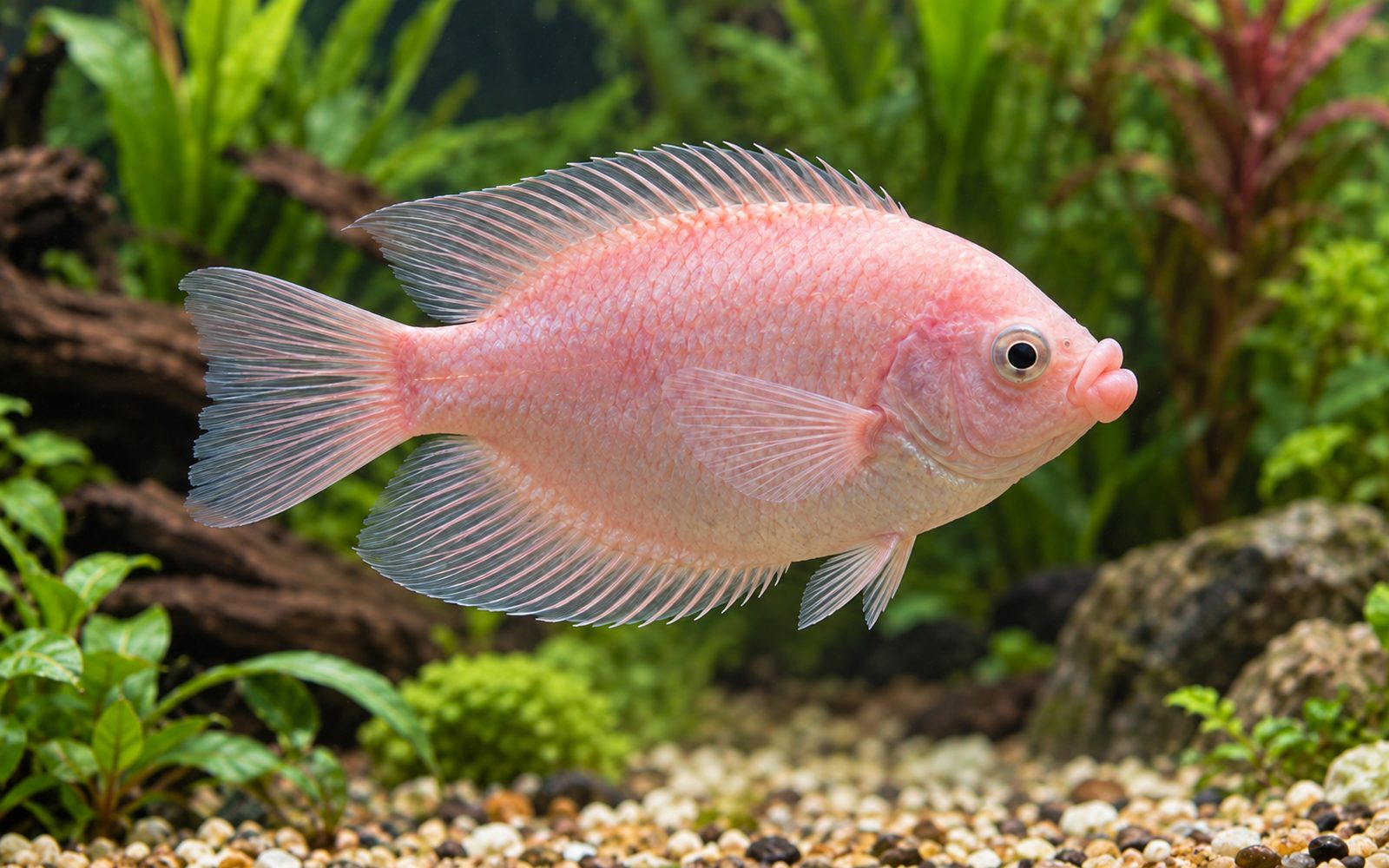
The kissing gourami is recognized by its thick, outward-turned lips. The pink form is the one most often sold for aquariums; the wild form is silvery green. Two fish "kissing" lip to lip may look cute, but it is actually a struggle over territory and hierarchy.
It is sold small in stores, but it can reach 20 cm, and 25–30 cm in a large aquarium.
Natural Habitat
It lives in slow-flowing rivers, lakes and swamps of Southeast Asia, in warm, plant-rich water. It is also caught as food in the region.
Tank Setup
- Volume: at least 250 liters and 120 cm in length.
- Plants: it eats soft-leaved plants; tough plants such as Anubias and Java fern hold up.
- Water: 24–27°C; adapts to a wide range of values. A strong filter is needed.
Diet
Omnivorous. It scrapes algae off the glass and decor with the tiny teeth on its lips; it also filters plankton and fine particles from the surface. Flakes and granules, spirulina, blanched vegetables (lettuce, spinach, zucchini) and frozen foods.
Behavior and Compatibility
Generally calm but can be intolerant of its own species; "kissing" fights sometimes turn into constant chasing. It is mostly trouble-free with other species, but it may try to "clean" the bodies of slow fish with its lips.
Good companions: peaceful fish of similar size: large barbs, blue gourami, silver dollar, large plecos.
Avoid: very small fish, long-finned fish, planted setups.
Group and Colony Structure
In most aquariums a single fish is the most trouble-free setup. If a group is wanted, keeping 3 or more in an aquarium of 300 liters or more spreads out the aggression; two fish is the most problematic setup.
Breeding
It does not build a bubble nest: its eggs are released toward the surface and float; the parents do not guard them and even eat them. It can be bred in a large aquarium, but this is rare in the hobby.
Health and Common Problems
Hardy. With insufficient plant matter in the diet and in poor water, bacterial infections can occur.
Sexing
It is very hard to tell apart from the outside; females carrying eggs are fuller.
Tank mates
This list is calculated automatically from the species profile and grows as new species are added to the catalog. Try it in the planner for a definite answer.
Usually compatible
 Yellow Regal Peacock
Glass Tetra
Yellow Regal Peacock
Glass Tetra
 Emerald Betta
 Firemouth Cichlid
 Buffalohead Cichlid
 Chocolate Cichlid
 Demasoni Cichlid
 Festivum
 Rainbow Cichlid
 Gymnogeophagus balzanii
Should not be kept together

Hobbyist notes
Things you won't find in books, learned by trial and error. The most helpful ones are on top.
Change history and contributors
- Page created · October 16, 2026