
Water parameters
Overview
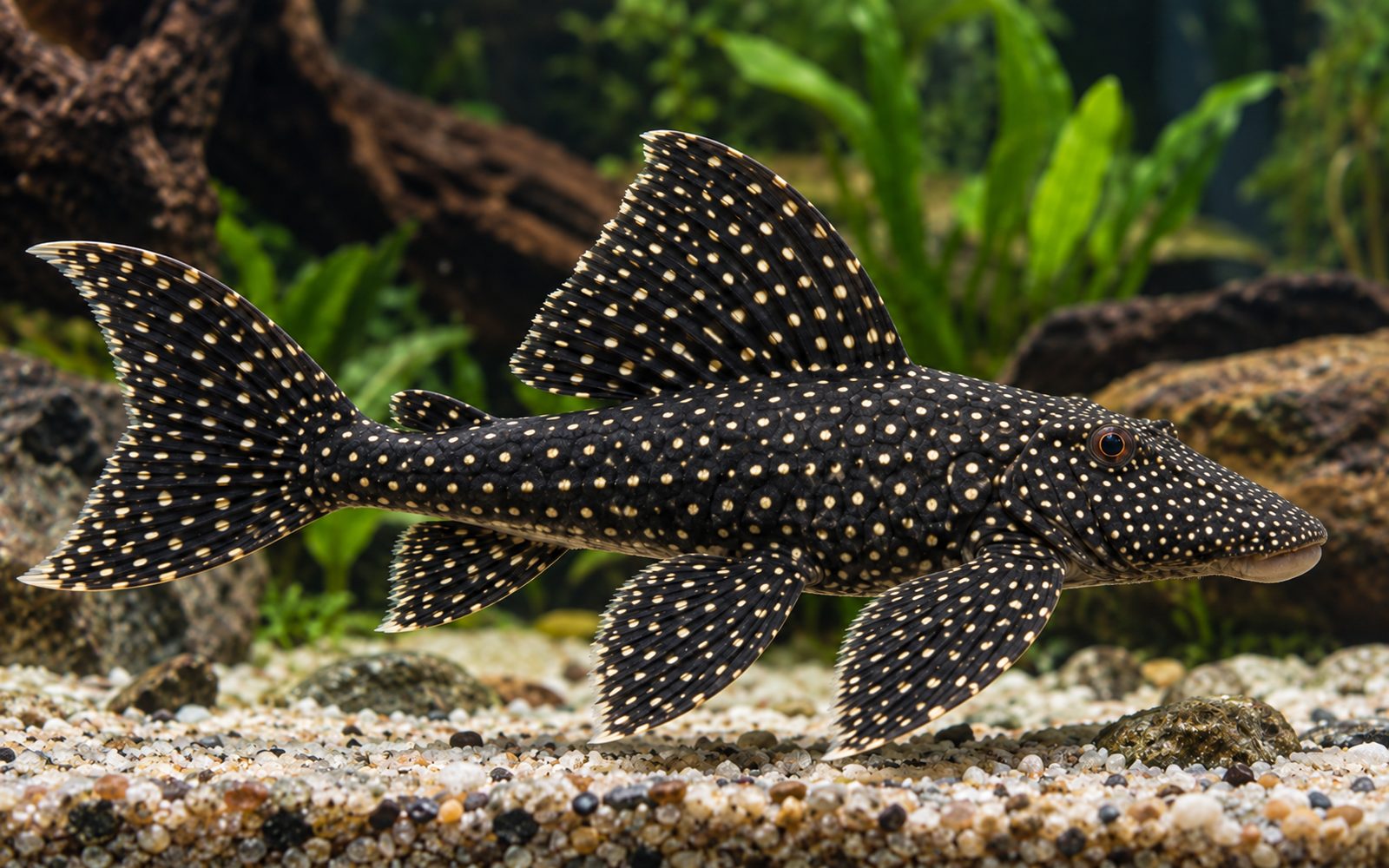
The galaxy pleco is the best-known member of the genus Leporacanthicus, with its spotted body reminiscent of the night sky and the long, pointed teeth in its upper jaw. The name "vampire pleco" comes from these teeth, which in the wild are used to catch snails and crustaceans and pull them out of their shells.
The true L. galaxias is known by the number L029. Forms sold under the numbers L007 and L240, with a taller dorsal fin or different spots, are referred to as "cf. galaxias," and their care is the same. Although sold small as juveniles, it reaches 20–25 cm.
Natural Habitat
It lives in the fast-flowing, rocky stretches of the Tocantins basin. It hides in crevices between stones and hunts snails and insect larvae on the rocks.
Tank Setup
- Volume: At least 300 liters and 120 cm in length for one adult.
- Cave: A cave or rock hollow sized to its body; it claims its own territory.
- Flow and oxygen: A powerful filter and circulation pump.
- Water: 26–28°C, with a 30% water change every week.
- Decor: Because it can dig under rock piles and shift them, rocks should be set up securely so they cannot topple.
Diet
Carnivorous. Mussel and shrimp pieces, bloodworms, mysis, krill and protein-rich sinking wafers should be the staple. It loves snails and is also used to control snail infestations. It may eat small amounts of vegetables but should not be fed like a herbivorous pleco. Since it feeds at night, give food after the lights go off; siphon out leftover meaty food the next morning.
Behavior and Compatibility
Nocturnal and territorial. It can be aggressive toward its own kind and other plecos and defends its cave fiercely. It generally leaves medium-sized fish alone, but shrimp and snails become its food.
Good companions: Medium to large, fast, hardy fish: large tetras, Geophagus species, medium-sized cichlids, large barbs.
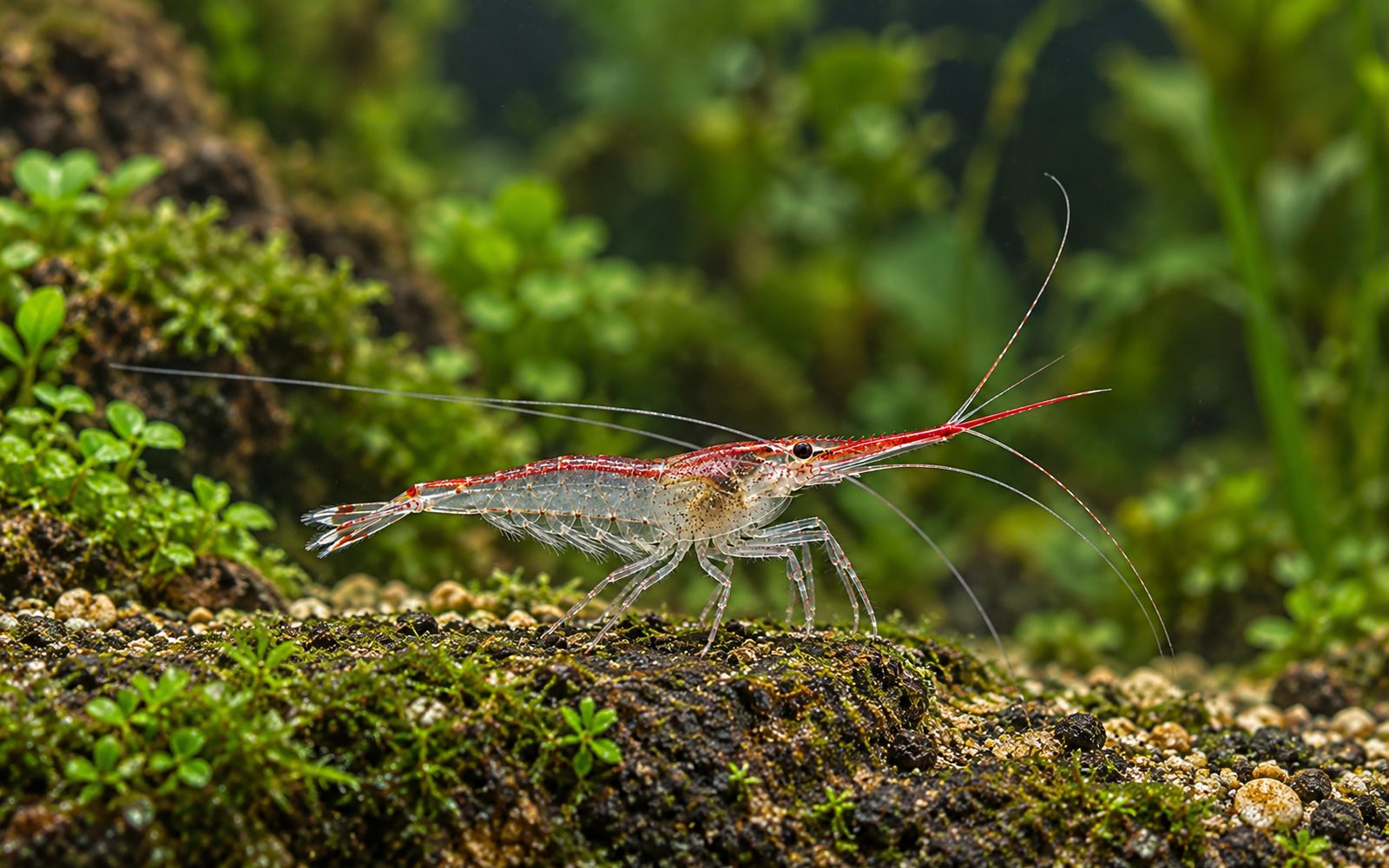
Avoid: Shrimp, snails, other plecos (in a confined space), very small, slow bottom dwellers.
Group and Colony Structure
In a home aquarium a single individual is kept. More than one Leporacanthicus can only be attempted in a very large aquarium, with a separate cave and visual barriers for each. If another pleco species is kept in the same aquarium, it too should have its own cave away from the galaxy pleco's territory.
Breeding
It breeds in caves; the male guards the eggs. Breeding in the aquarium is rare and requires a lot of space.
Health and Common Problems
Hardy. Low oxygen and dirty water cause problems. Individuals fed only vegetables lose condition. It is sensitive to copper.
Sexing
Mature males have a wider head and longer odontodes on the pectoral fin spines and cheeks. Females are plumper when viewed from above.
Tank mates
This list is calculated automatically from the species profile and grows as new species are added to the catalog. Try it in the planner for a definite answer.
Usually compatible
 Emerald Betta
 Altum Angelfish
 Firemouth Cichlid
 Buffalohead Cichlid
 Chocolate Cichlid
 Festivum
 Geophagus altifrons
 Geophagus surinamensis
 Rainbow Cichlid
Should not be kept together


Hobbyist notes
Things you won't find in books, learned by trial and error. The most helpful ones are on top.
Change history and contributors
- Page created · October 16, 2026