
Water parameters
Overview
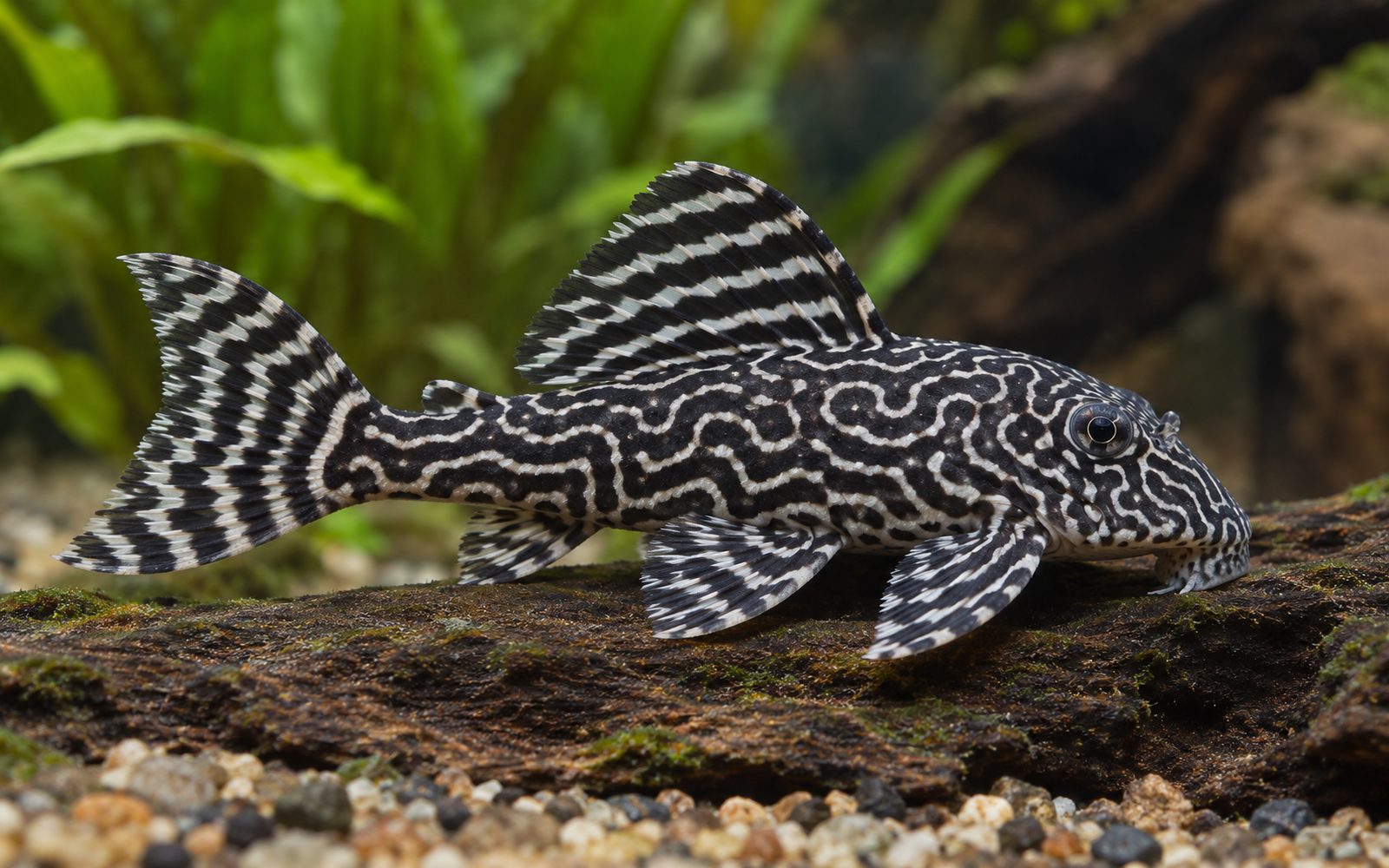
The queen arabesque pleco is a small Hypancistrus in which thin, dense white lines form an arabesque pattern on a black background. It has not yet been scientifically described and is known by the number L260. It is easier to find than the zebra pleco, and captive-bred fish are common.
L411 from the Rio Jari and some other Hypancistrus look very similar to it; they can be mixed up in the trade and hybrids may be sold. Buying from a reliable source is important.
Natural Habitat
It lives in the lower Tapajós River, in rock crevices along rocky stretches of clear, fast-flowing water. The water is warm, rich in oxygen and soft. It spends the day inside narrow crevices and, in the dark, searches the rocks for small invertebrates and organic debris.
Tank Setup
- Volume: at least 100 liters for a small group; footprint matters.
- Flow and oxygen: an additional powerhead and aeration.
- Caves: a narrow, long cave for each fish; flat stones and clay tubes.
- Water: 27–29°C, a 30% water change every week, low nitrate.
Diet
Mainly carnivorous: bloodworms, mysis, brine shrimp, pieces of shrimp and protein-rich sinking granules. It occasionally eats vegetable tablets too, but it is not an algae cleaner. Feed in the evening, after the lights go out.
Behavior and Compatibility
Peaceful and shy; it stays in its cave during the day. Males chase each other over caves. It loses the competition for food to fast, greedy bottom dwellers.
Good companions: Discus, cardinal and rummy-nose tetras, sterbai corydoras, dwarf cichlids.
Avoid: Other Hypancistrus species (hybridization), large territorial plecos, aggressive cichlids, coldwater fish.
Group and Colony Structure
It can be kept singly, but a group of 3–5 behaves more naturally. Provide more caves than males. For breeding, 2 females per male are recommended. Females kept in a group may visit the caves of different males during the breeding season.
Breeding
It breeds in caves and is bred regularly in the aquarium. The female lays her large eggs in the male's cave; the male guards the eggs and fry throughout incubation. The fry leave the cave once the yolk sac is used up and accept crushed frozen food and fine granules.
Health and Common Problems
Low oxygen and high nitrate lead to loss of appetite and bacterial infections. Because less oxygen dissolves in warm water, increase aeration in the summer months. Avoid copper-based medications; observe new arrivals in a separate tank for a few weeks and make sure they are eating.
Sexing
Males have broader, more angular heads and longer pectoral fin spines and cheek odontodes. Females are plumper when viewed from above. Sexing can only be done reliably in mature fish over 6–7 cm.
Tank mates
This list is calculated automatically from the species profile and grows as new species are added to the catalog. Try it in the planner for a definite answer.
Usually compatible
 Emerald Betta
 Emerald Cory
 Keyhole Cichlid
 Cupid Cichlid
 Discus
 Geophagus altifrons
 Geophagus surinamensis
 Cryptocoryne Parva
 Gold Spot Pleco (L001)
African Red-eyed Tetra
Gold Spot Pleco (L001)
African Red-eyed Tetra
Should not be kept together






Hobbyist notes
Things you won't find in books, learned by trial and error. The most helpful ones are on top.
Change history and contributors
- Page created · October 16, 2026