
Water parameters
Overview
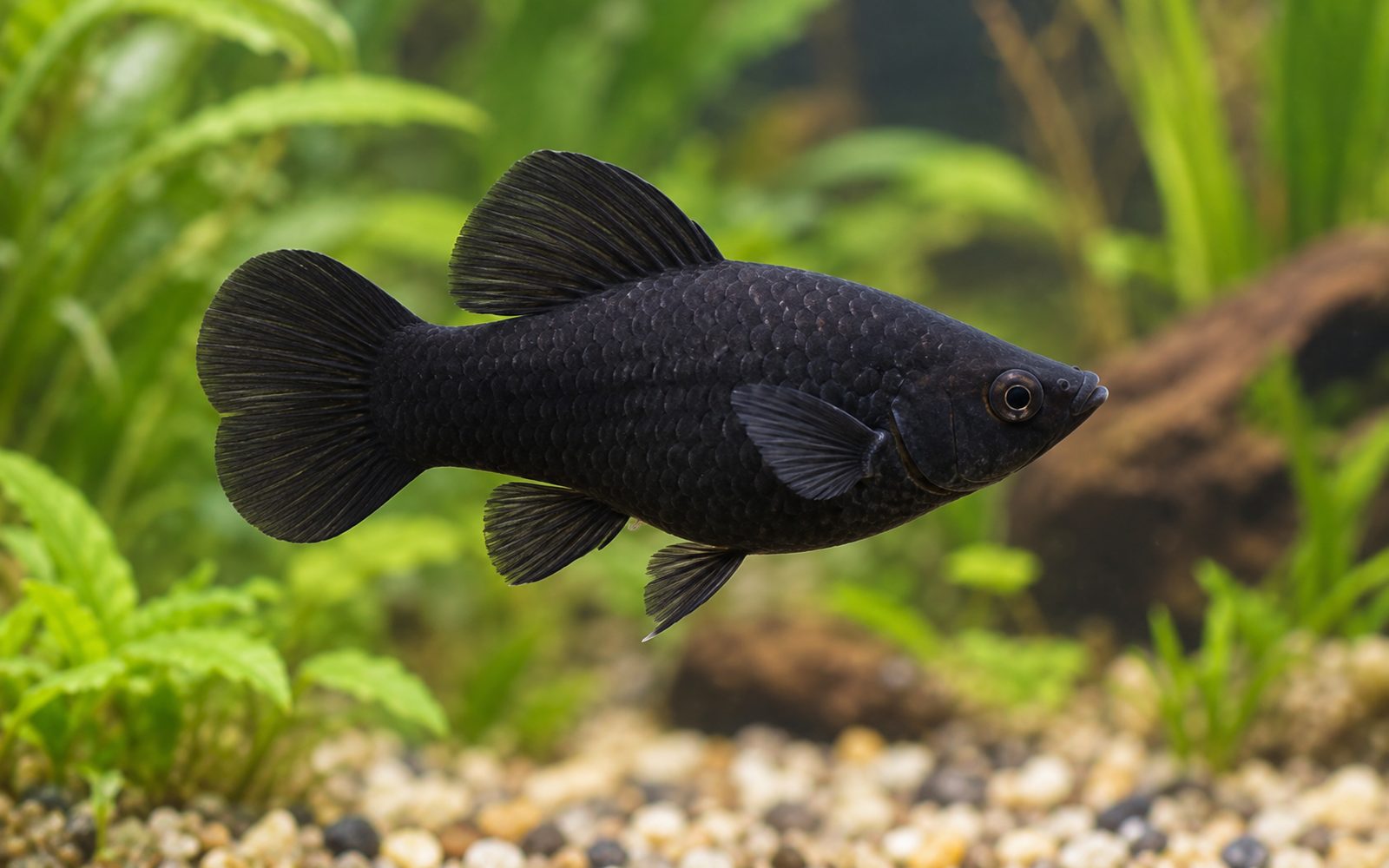
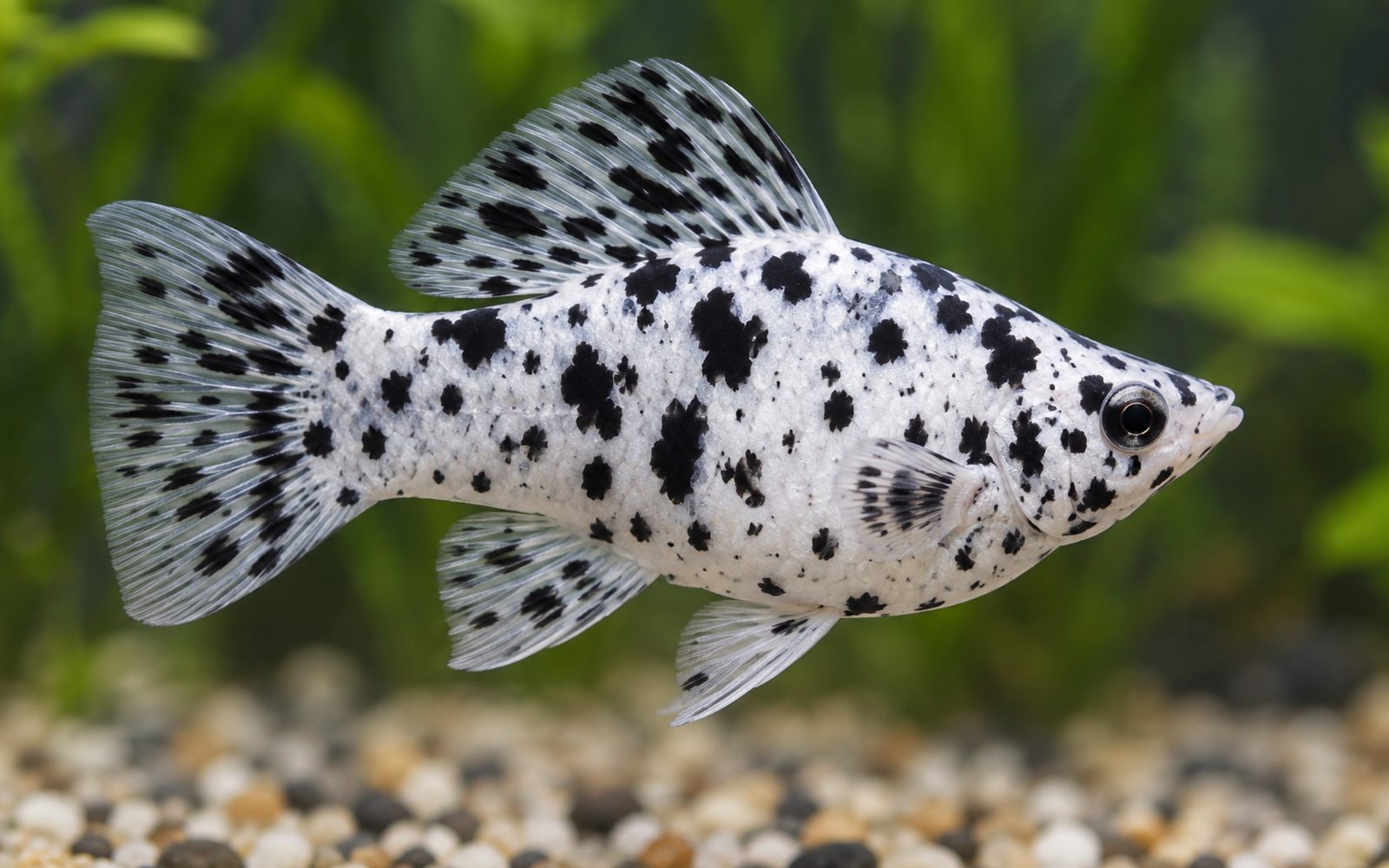
The fish sold as mollies are made up of Poecilia sphenops and hybrids of the sail-finned P. latipinna and P. velifera. Velvet black, dalmatian, gold and "balloon"-bodied forms are common. It can be thought of as a larger, more "herbivorous" relative of the guppy.
Mollies are at their best in hard, alkaline, slightly salty water. Mollies kept in soft water often show a trembling called "shimmy" and are prone to disease.
Color and Fin Varieties
The varieties have not been described yet. Be the first to write it.
Natural Habitat
In the wild it lives in coastal lagoons, river mouths and streams and canals with warm, hard water. Some populations can live in brackish water and even in seawater.
Tank Setup
- Volume: at least 80 liters for a small group; sailfin mollies reach 10–12 cm, so 120 liters is more suitable.
- Water: 25–27°C, pH 7.5–8.5, hard water. Tap water is generally suitable. 1–2 grams of aquarium salt per liter is the choice of many breeders, but it is not added when they are kept with species that do not like salt (corydoras).
- Plants and algae: it grazes green algae on surfaces; it is happy in a well-lit, planted aquarium.
Diet
Omnivorous but mainly plant-based. Make spirulina flakes the staple; add blanched zucchini, spinach and occasionally brine shrimp. Mollies allowed to graze algae have better colors and digestion.
Behavior and Compatibility
Generally peaceful. Males chase females intensely; there should be 2–3 females per male. There may be show fights between males, especially in sailfin mollies.
Good companions: guppies, platies, swordtails, zebra danios, hard-water species other than Malawi cichlids, shrimp (it may eat the shrimplets).
Avoid: species that need soft, acidic water (neons, discus), fin nippers.
Group and Colony Structure
Mollies are kept in a harem arrangement: 2–3 females per male. Males chase females intensely and put on show fights with each other; a single male, or a few males within a large group of females, is the most balanced setup.
A group of 6–8 (2 males, 4–6 females) is comfortable in a 100-liter aquarium. Being livebearers, the group grows on its own; to keep the population in balance, you can consider giving some of the fry to other hobbyists or setting up a females-only group.
Breeding
Like the guppy, it is a livebearer. Gestation lasts 6–10 weeks and the female can give birth to 20–100 fry. The fry are large at birth and can eat flakes from day one. Adults eat the fry; dense plants or a breeding box can be used.
Health and Common Problems
- Shimmy: the fish swims in place, trembling. It is a sign of soft water, low temperature or poor water quality; increasing water hardness usually solves it.
- Columnaris and white spot: in stressful, soft waters.
- In balloon mollies: swimming and digestive problems are more common because of the shortened spine.
Sexing
The males' anal fin has been modified into a gonopodium; in sailfin types the males' dorsal fin is much larger. Females are larger and plumper, with a fan-shaped anal fin.
Tank mates
This list is calculated automatically from the species profile and grows as new species are added to the catalog. Try it in the planner for a definite answer.
Usually compatible
 Flame Tetra
 Blackfin Corydoras
 Polystictus Corydoras
 Emerald Betta
 Emerald Cory
 Porthole Catfish
 Keyhole Cichlid
 Cryptocoryne Parva
 Gold Spot Pleco (L001)
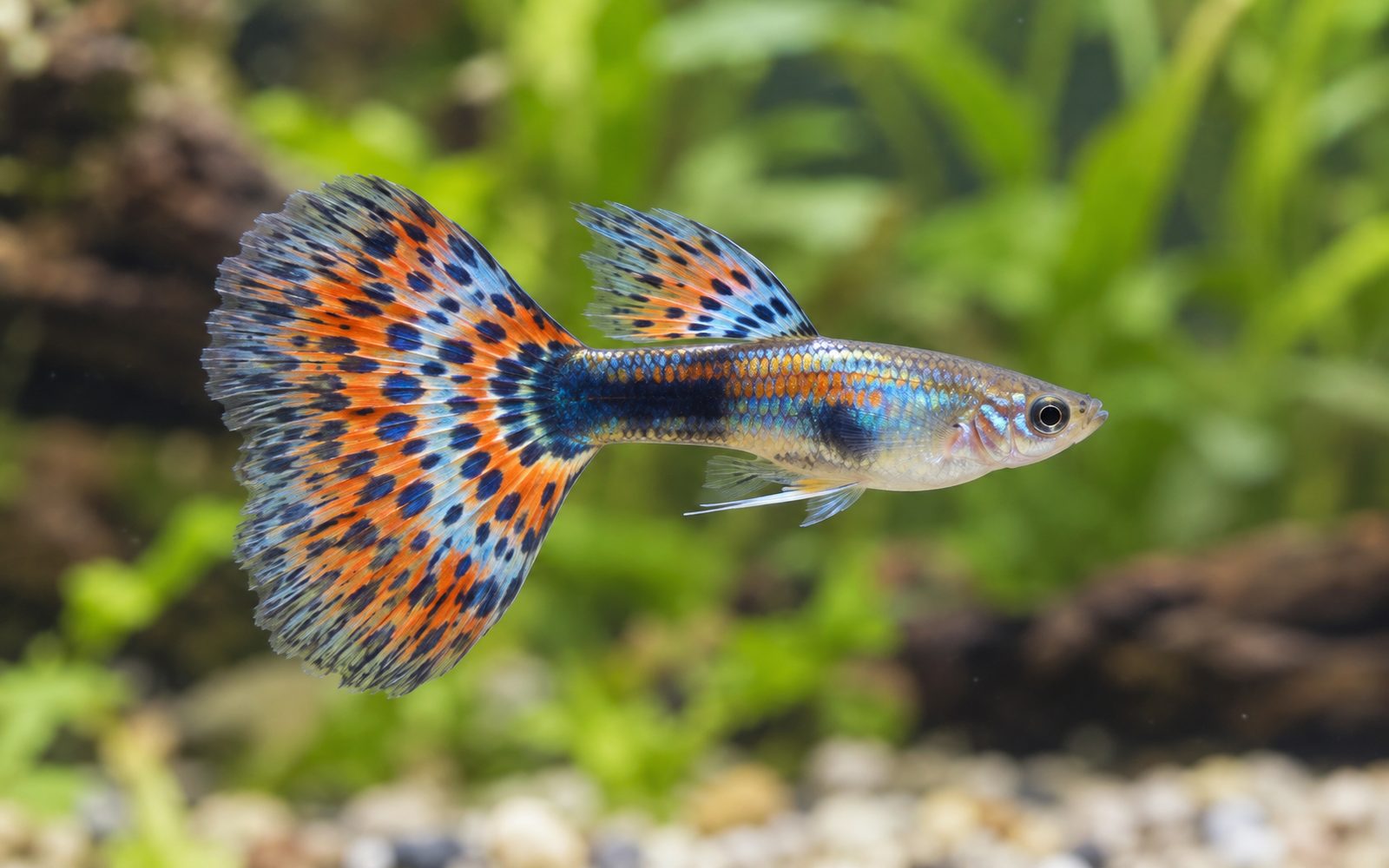 Guppy
Guppy
Should not be kept together






Hobbyist notes
Things you won't find in books, learned by trial and error. The most helpful ones are on top.
Change history and contributors
- Page created · October 16, 2026