
Water parameters
Overview
Although the Odessa barb has been known in the hobby for decades, it was only described scientifically as a separate species in 2008; for a long time it was thought to be a color form of the ticto barb. Its name is said to come from the fish market in Odessa (Ukraine), described as the place where it was first seen in Europe.
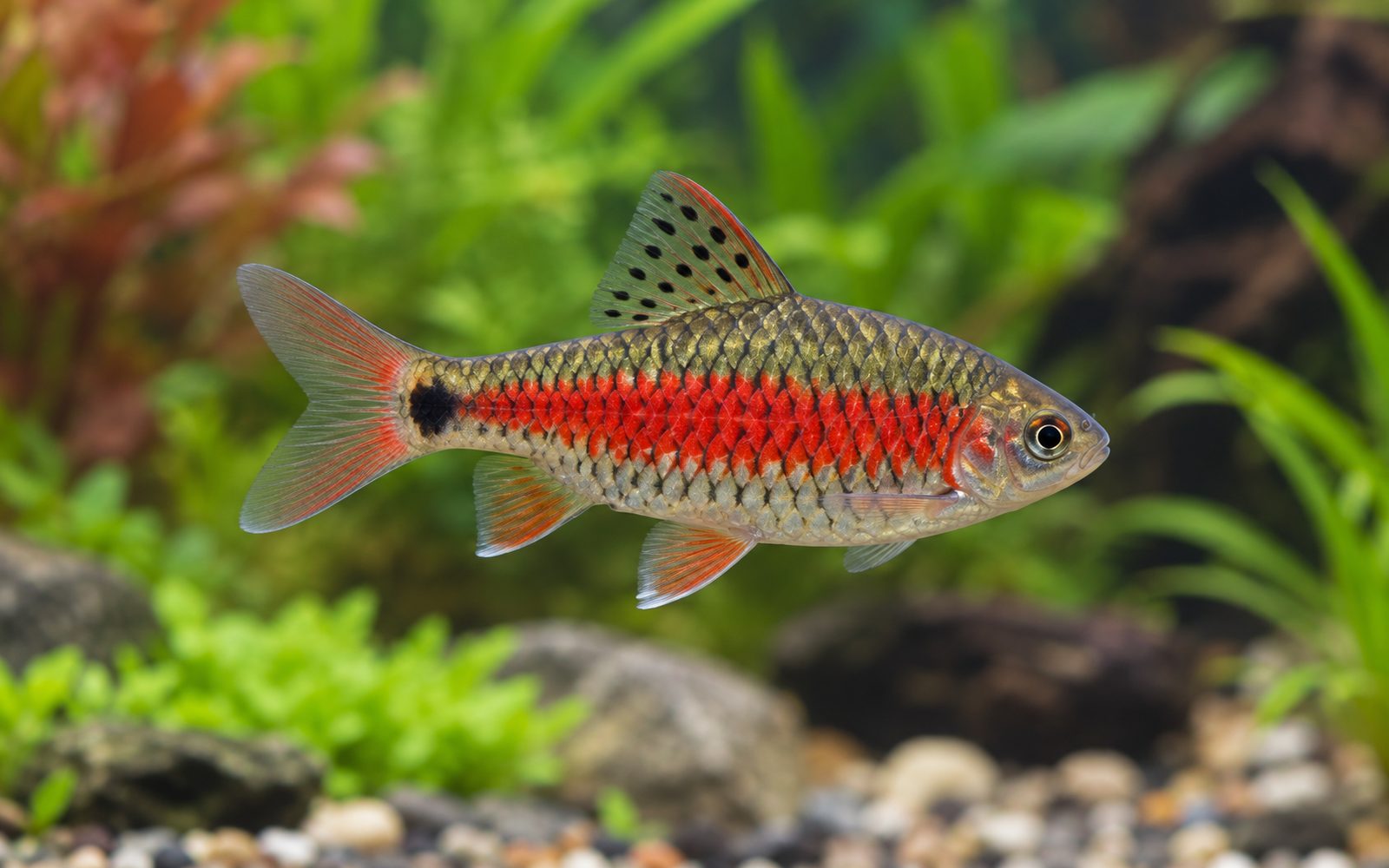
When the red band on the male's body combines with the net pattern formed by its black-edged scales, the result is very striking. It is hardy with a good appetite and adapts to a wide range of water parameters.
Natural Habitat
Its natural habitat is not known in detail. It is believed to live in streams, ponds and wetlands connected to the Ayeyarwady basin in central Myanmar. The region has a monsoon climate; water level and temperature change markedly with the seasons.
Tank Setup
- Volume: at least 80 liters and 80 cm in length for a group of 6–10.
- Water: comfortable at 21–25°C; it also adapts to an unheated tank if the room does not drop below 20°C. It is flexible about pH and hardness.
- Decor: plants along the edges, open swimming space in the middle. A dark substrate and slightly dim light bring out the males' red.
- Maintenance: a 25–30% weekly water change and well-oxygenated water.
Diet
Omnivorous with a good appetite. Quality flakes and granules; frozen bloodworms, brine shrimp and daphnia; plant supplements such as spirulina food or blanched spinach. Carotenoid-rich foods support the males' red color.
Behavior and Compatibility
Active and curious. Males constantly display to each other; their colors are brightest during these displays. In a large group it spends its energy on its own kind; in a group of 3–4, or when bored, it may nip the fins of slow, long-finned fish.
Good companions: other medium-sized barbs, zebra danios, large rasboras, platies, swordtails, corydoras, bristlenose plecos.
Avoid: slow, long-finned species such as bettas, guppies, angelfish and long-finned goldfish; very small and shy fish.
Group and Colony Structure
Keep at least 6, ideally 10 or more. A female-heavy group (1 male : 2 females) keeps the females from being worn out and keeps the display rivalry between males lively. Fin-nipping drops off noticeably as the group grows.
Breeding
Like other barbs, it is an egg scatterer and provides no parental care. Spawning usually takes place in the morning over fine-leaved plants or a spawning mop; the parents eat the eggs right away. A separate breeding tank, a grid or a layer of marbles on the bottom, and removing the adults after spawning increase success. The eggs hatch in 1–2 days.
Health and Common Problems
Hardy. White spot and fin rot in poor water are the most common problems. The males' red fades with stress, poor water or a monotonous diet; loss of color is often a warning to check the water parameters.
Sexing
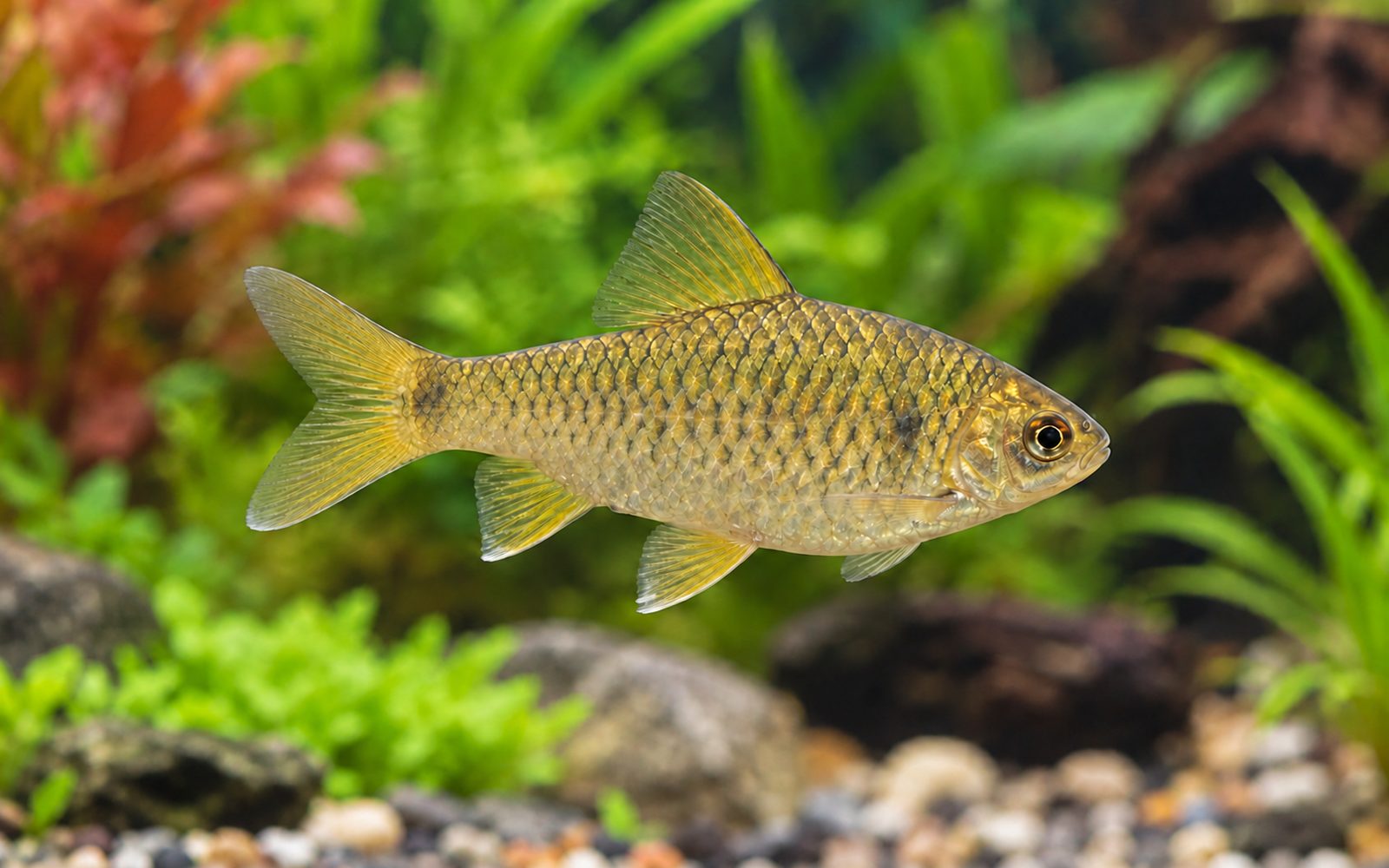
Males have a bright red band along the body, a black-spotted dorsal fin and a distinct net pattern. Females are plumper, olive-gold and without red; their fins are yellowish or clear.
Tank mates
This list is calculated automatically from the species profile and grows as new species are added to the catalog. Try it in the planner for a definite answer.
Usually compatible
 Emerald Betta
 Emerald Cory
 Porthole Catfish
 Keyhole Cichlid
 Buffalohead Cichlid
 Geophagus surinamensis
 Rainbow Cichlid
 Gymnogeophagus balzanii
 Blood Parrot
Should not be kept together






Hobbyist notes
Things you won't find in books, learned by trial and error. The most helpful ones are on top.
Change history and contributors
- Page created · October 16, 2026