
Water parameters
Overview
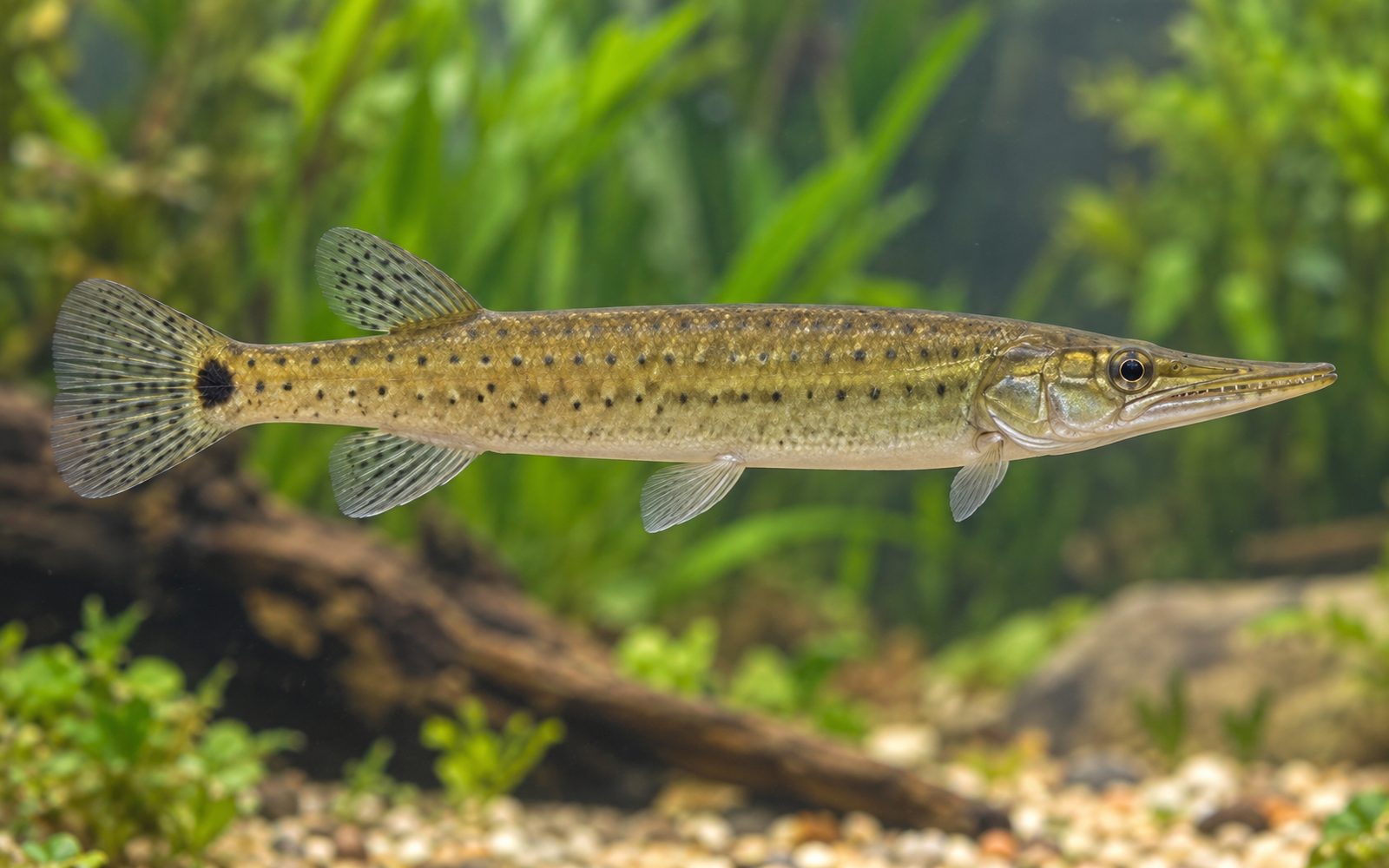
Although the pike livebearer is a relative of the guppy and platy, it leads a completely different life: it is an ambush predator. With its long, slender body, forward-projecting toothed jaws and dorsal and anal fins set far back, it resembles a small pike. Its olive–tan body is covered with small dark spots, and there is a dark spot at the base of the tail.
Females reach 18–20 cm and males 10–12 cm. It eats any fish that fits in its mouth, its own fry and occasionally small males of its own species. For this reason it is a fish only for experienced hobbyists, to be kept in a species-only aquarium.
Never release it into the wild: it has been introduced to Florida, where it has become established and turned into an invasive species that preys on native fish.
Natural Habitat
It lives on the Atlantic slope of Central America in vegetated marshes, canals, lake shores and brackish waters near the coast. It waits motionless among plants near the water surface and attacks approaching fish with a sudden strike.
Tank Setup
- Volume: at least 200 liters and a 120 cm tank length for a single female or a pair.
- Water: 26–28°C, pH 7–8, moderately hard to hard water. A little salt is optional.
- Layout: dense plants reaching the surface and floating plants; the fish sets up ambushes among them.
- Lid: it jumps when lunging at prey or when startled; a tight lid is essential.
- Cleanliness: a carnivorous diet pollutes the water quickly; a strong filter and a 30% water change every week are needed.
Diet
Carnivorous. In the wild it feeds almost exclusively on fish. Feeding live fish in the aquarium carries the risk of introducing disease; to reduce this risk, feeder fish should be bred at home or put through quarantine. Some individuals gradually get used to frozen fish pieces, large bloodworms, mysis and shrimp; juveniles also feed on mosquito larvae and insects. Avoid overfeeding; a few meals a week are enough.
Behavior and Compatibility
An ambush predator; it waits motionless for long periods and then attacks with a sudden lunge. It can sometimes be kept with large fish close to its own size that do not threaten it, but the safest option is a species-only aquarium.
Good companions: a species-only aquarium is recommended; in a very large aquarium, calm species that are clearly larger than it and use the bottom zone (large plecos).
Avoid: any fish that fits in its mouth, shrimp, smaller individuals of its own species, fin nippers and fast surface fish.
Group and Colony Structure
It is usually kept singly or as a pair. In a very large, densely planted aquarium several individuals of similar size can live together, but a hungry female may hunt males smaller than herself. Never keep individuals of different sizes together.
Breeding
A livebearer. Gestation is longer than in other livebearers (about 6–8 weeks). Large females can give birth to dozens, sometimes more than a hundred, fry at a time. The fry are born 2–3 cm long and well developed; they are fed small live foods from day one. The mother eats the fry, and the fry hunt each other; if they are not sorted by size, their numbers drop quickly.
Health and Common Problems
Parasites and bacteria from live feeder fish are the greatest risk. It may refuse food during shipping and while settling into a new aquarium; a calm, planted environment shortens this period. Crashing into the glass when startled can lead to jaw injuries.
Sexing
Males are clearly smaller, and their anal fin has been modified into a gonopodium. Females are nearly twice as large, thicker-bodied and have a fan-shaped anal fin.
Tank mates
This list is calculated automatically from the species profile and grows as new species are added to the catalog. Try it in the planner for a definite answer.
Usually compatible
 Banded Jewel Cichlid
 Spotted Tilapia
 Demasoni Cichlid
 Flowerhorn
 Jack Dempsey
 Jaguar Cichlid
 Red Devil Cichlid
 Red Terror Cichlid
 Convict Cichlid
 Cryptocoryne Parva
Should not be kept together








Hobbyist notes
Things you won't find in books, learned by trial and error. The most helpful ones are on top.
Change history and contributors
- Page created · October 16, 2026