
Water parameters
Overview
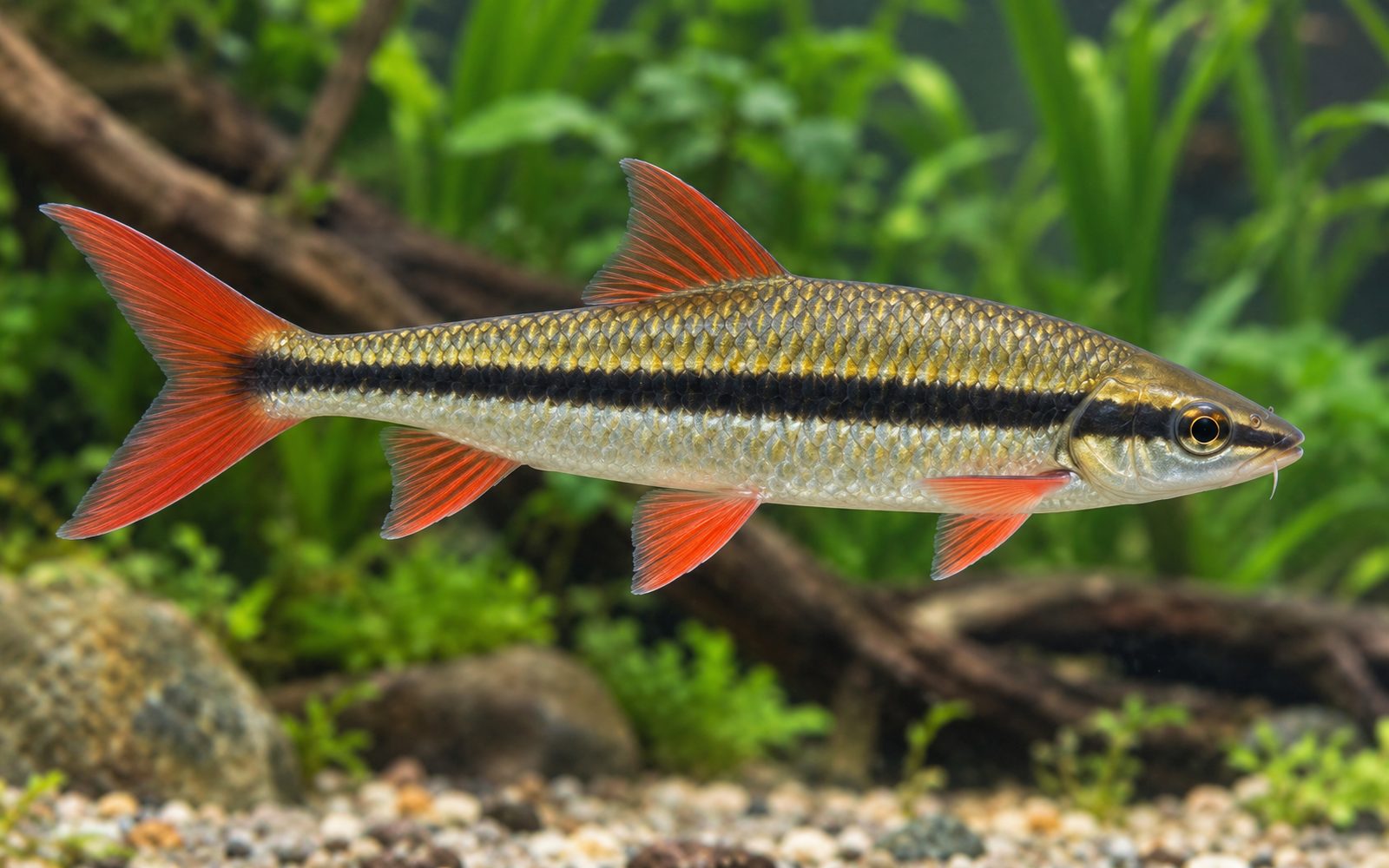
The sun loach is recognized by its body, which ranges between metallic yellow and reddish brown, and the large dark spot on both sides of the caudal peduncle. Adults reach 10–11 cm. Breeding males have been reported to turn navy blue, with the edge of the dorsal fin turning red. It is known as one of the toughest-tempered members of the genus; when space and shelters are scarce it defends its territory fiercely.
Tank Setup
- At least 150 liters and 120 cm of length for a group of 5–6.
- 24–28°C, pH 6–7.5; well-oxygenated water, moderate flow.
- Many caves and a stone-and-root layout that breaks lines of sight reduce fighting.
- A tight lid is essential; it jumps.
Diet
An omnivore leaning toward meaty foods. Offer sinking granules, frozen bloodworms, brine shrimp, tubifex and blanched vegetables or fruit. It may nibble soft plants; it hunts snails.
Behavior and Compatibility
In a large group the aggression is spread among themselves; when kept in small numbers it may bully other fish.
Good companions: robust, fast medium-sized fish: barbs, devarios, large danios, botias of similar temperament.
Avoid: snails, shrimp, slow and long-finned species, small aquariums.
A short profile for this species
The Sun Loach page has the basics, but the sections below have not been written yet. If you keep this species, write a section from your own experience; it will be published under your name after editor approval.
Tank mates
This list is calculated automatically from the species profile and grows as new species are added to the catalog. Try it in the planner for a definite answer.
Usually compatible
 Emerald Betta
 Firemouth Cichlid
 Cupid Cichlid
 Buffalohead Cichlid
 Chocolate Cichlid
 Festivum
 Geophagus altifrons
 Geophagus surinamensis
 Rainbow Cichlid
Should not be kept together





Hobbyist notes
Things you won't find in books, learned by trial and error. The most helpful ones are on top.
Change history and contributors
- Page created · October 16, 2026