
Water parameters
Overview
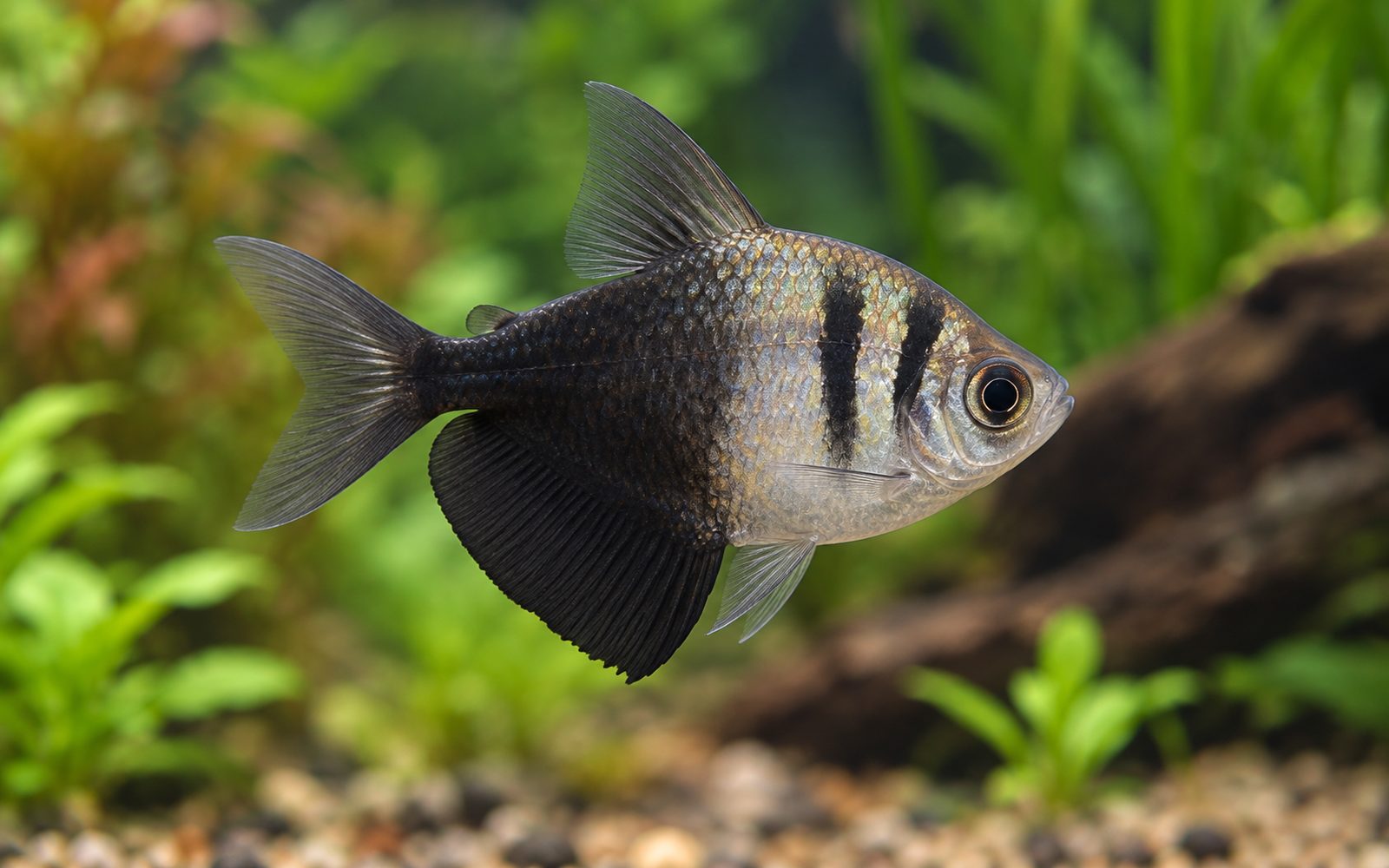
The black skirt tetra is recognized by the two vertical black bars on its silvery front body and the black "skirt" (broad anal fin) that darkens toward the rear. It is very hardy and adapts to a wide range of water parameters, which makes it one of the tetras suitable for beginners. Besides long-finned and albino forms, artificially dyed fish ("colored tetras") are also sold; dyed fish should be avoided.
Natural Habitat
It lives in slow-flowing, vegetated and shaded river tributaries in central South America.
Tank Setup
- Volume: at least 60 liters for a school of 6–8.
- Water: 22–25°C; adapts to a wide range of pH and hardness.
- Setup: Planted edges, open space in the middle water layer.
Diet
Omnivorous with a good appetite. Flakes and granules, frozen and live foods (brine shrimp, bloodworms, daphnia), and occasionally plant-based food.
Behavior and Compatibility
Generally trouble-free, but it has a tendency to nip fins; especially when kept in small numbers or when bored, it harasses slow, long-finned fish.
Good companions: platies, mollies, zebra danios, other tetras, corydoras, bristlenose plecos.
Avoid: species with long, flowing fins such as bettas, guppies, angelfish and dwarf gouramis.
Group and Colony Structure
At least 6, ideally 8 or more individuals. In a large group, black skirt tetras spend their energy chasing each other and pay less attention to other fish. The sex ratio does not matter.
Breeding
Breeds easily. It scatters its eggs over fine-leaved plants or a spawning mop; the parents must be separated because they eat the eggs. The eggs hatch in 1–2 days.
Health and Common Problems
Hardy. White spot and fin rot can occur in poor water conditions. As it ages, the black color fades to gray; this is normal.
Sexing
Females are plumper and larger; males have slightly more pointed and longer dorsal and anal fins, and white dots may be visible on the anal fin.
Tank mates
This list is calculated automatically from the species profile and grows as new species are added to the catalog. Try it in the planner for a definite answer.
Usually compatible
 Yellow Regal Peacock
Glass Tetra
Yellow Regal Peacock
Glass Tetra
 Emerald Betta
 Emerald Cory
 Porthole Catfish
 Keyhole Cichlid
 Buffalohead Cichlid
 Geophagus surinamensis
 Rainbow Cichlid
 Gymnogeophagus balzanii
Should not be kept together






Hobbyist notes
Things you won't find in books, learned by trial and error. The most helpful ones are on top.
Change history and contributors
- Page created · October 16, 2026