
Water parameters
Overview
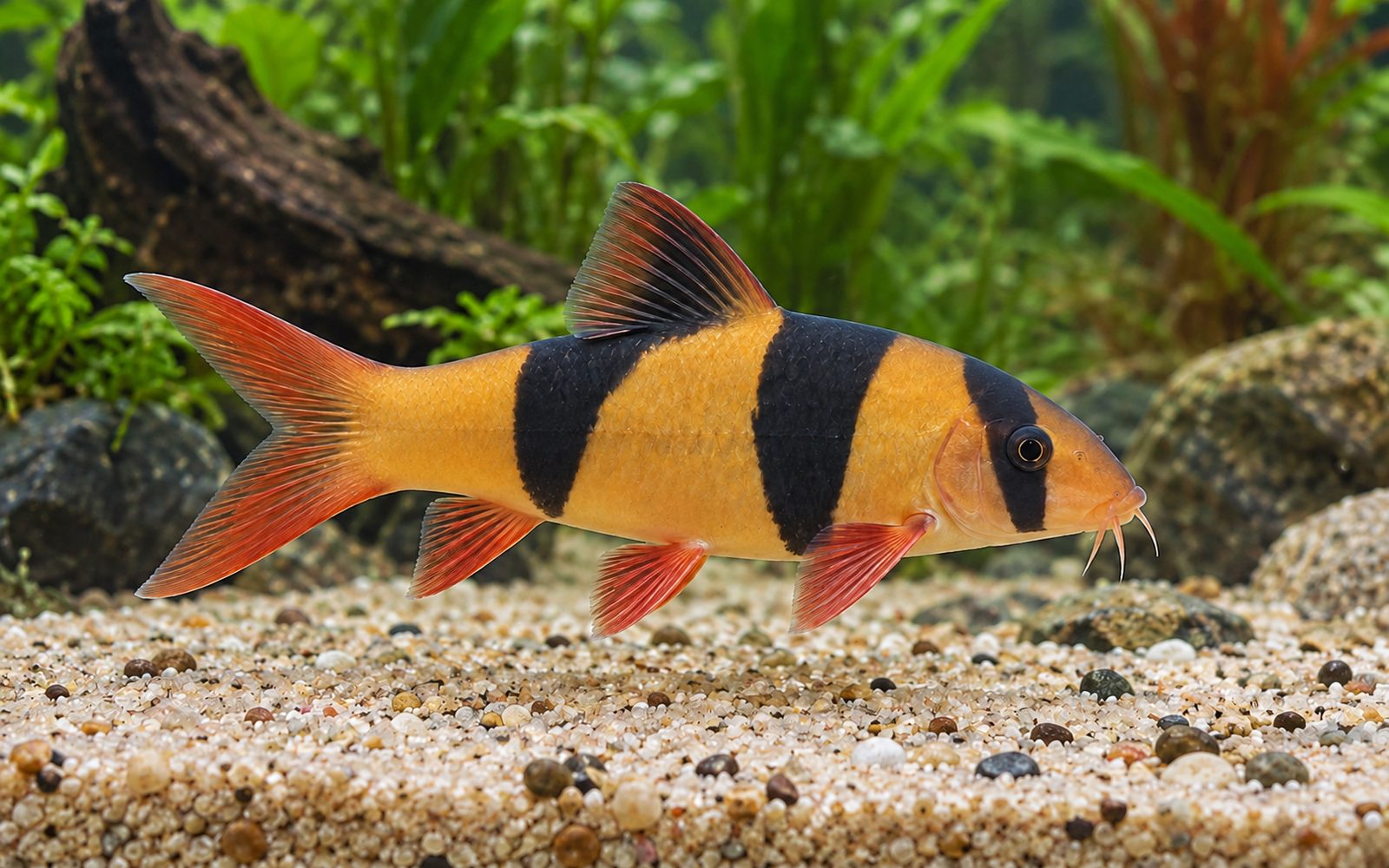
With its orange-yellow body and three thick black bands, the clown loach is one of the most popular bottom dwellers. It is playful: it rests lying on its side, "plays dead", plays chase with the other loaches in the group and makes clicking sounds.
It is sold at 5 cm in stores, but it grows slowly to 20 cm, and 30 cm in a large aquarium, and can live for more than 20 years. This needs to be taken into account before buying.
Natural Habitat
It lives in the rivers of Sumatra and Borneo; in the rainy season it migrates onto flooded plains. Most of the fish in aquariums are collected from the wild or bred on farms with hormones.
Tank Setup
- Volume: at least 400 liters and 150 cm of length for an adult group. Juveniles can start in a smaller aquarium, but growth must be planned for.
- Hiding places: Roots, caves, narrow gaps; botias like to rest squeezed into tight spots.
- Water: 26–29°C, oxygen-rich and clean; moderate flow.
- Substrate: Fine sand (for the barbels and belly).
- Lid: It can jump.
Diet
Omnivorous. Sinking granules and tablets, frozen bloodworms, brine shrimp, vegetables. It eagerly eats snails; that is why it is also used against snail infestations.
Behavior and Compatibility
Peaceful but active and boisterous; it establishes a hierarchy within its own group. It is also active at night.
Good companions: large tetras, barbs, rasboras, gouramis, angelfish, discus (the temperature suits them, but its activity may disturb discus).
Avoid: snails, shrimp, very slow and timid species, small aquariums.
Group and Colony Structure
The clown loach is a social schooling fish: at least 5–6 individuals. One or two loaches become stressed, hide and grow prone to illness; in a large group you get to see their play and clicking. As the group grows, the aquarium must grow too.
Breeding
It almost never breeds in the aquarium; commercial breeding is done on farms with hormone support.
Health and Common Problems
- White spot: Botias are among the species most prone to white spot; new fish must always be quarantined.
- Medication sensitivity: Its scales are very small; it is sensitive to many medications (especially malachite green and formalin). Start at half the dose and favor raising the temperature.
- Wasting: Internal parasites are common in imported fish.
Sexing
They are hard to tell apart from the outside. Mature females are plumper, and males may have more inwardly curved tail tips; there is no reliable way to tell them apart.
Tank mates
This list is calculated automatically from the species profile and grows as new species are added to the catalog. Try it in the planner for a definite answer.
Usually compatible
 Polystictus Corydoras
 Emerald Betta
 Emerald Cory
 Porthole Catfish
 Altum Angelfish
 Keyhole Cichlid
 Firemouth Cichlid
 Cupid Cichlid
 Buffalohead Cichlid
Should not be kept together






Hobbyist notes
Things you won't find in books, learned by trial and error. The most helpful ones are on top.
Change history and contributors
- Page created · October 16, 2026