
Water parameters
Overview
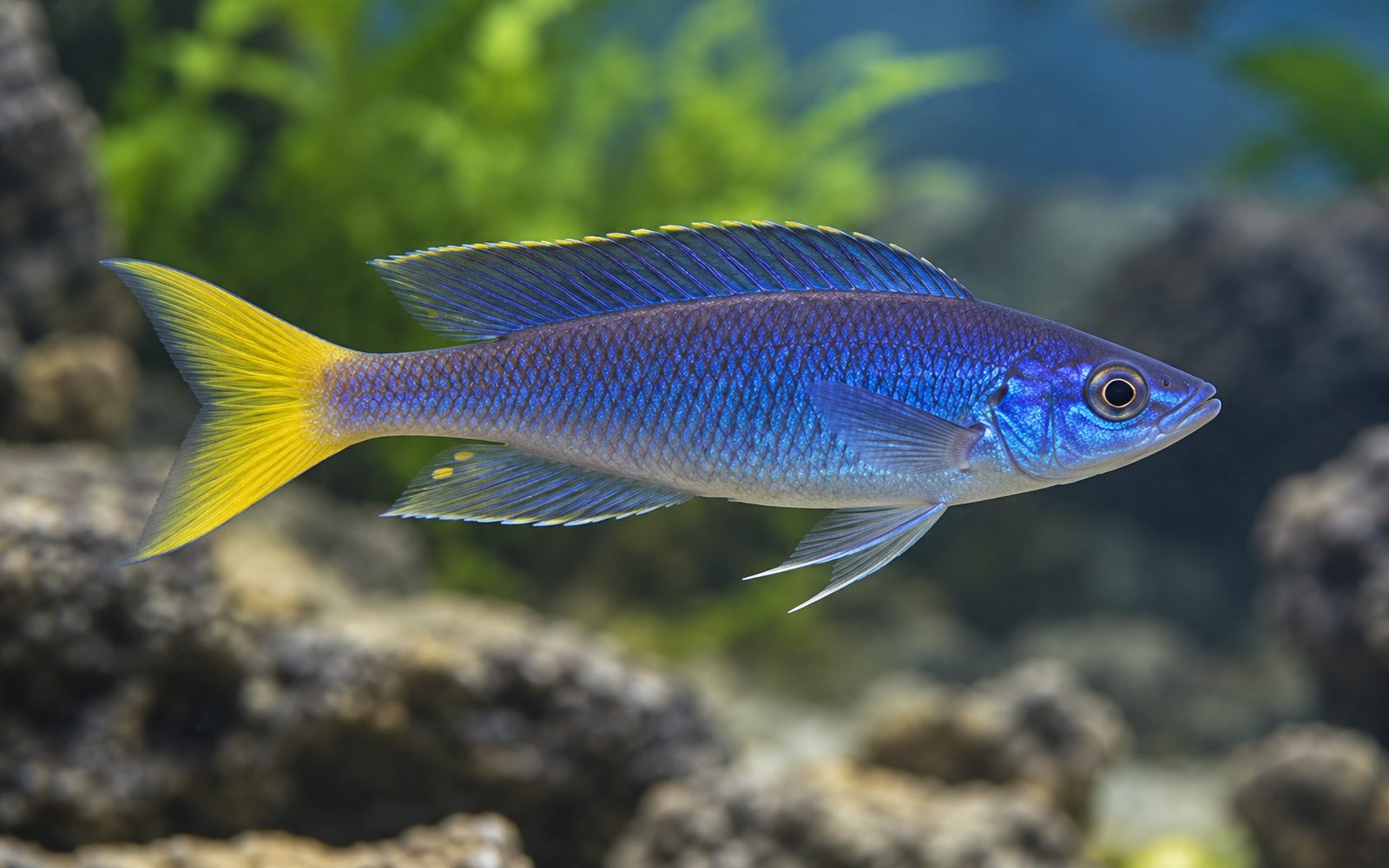
Cyprichromis leptosoma is the "schooling fish" of the Tanganyika cichlids. With its slender, elongated body and small, upturned mouth, it is adapted to picking plankton in open water. Males have a bright blue head and body and, depending on the local form, a yellow or blue tail; in some populations both tail colors are seen in the same place. Females are a plain silvery beige.
It is an ideal complement that shares the aquarium with territorial Tanganyika cichlids living on the bottom and fills the middle and upper part of the tank. Kept as a large group, blue males cruising the open water make an impressive sight.
Natural Habitat
It lives in schools of thousands in the open water in front of the lake's rocky shores, in areas close to the rock walls. It almost never descends to the bottom; it picks drifting zooplankton out of midwater one by one. During the breeding season males defend small three-dimensional territories in midwater, close to the rock walls.
Tank Setup
- Volume: at least 200 liters and a length of 120–150 cm for a group of 10–15; length matters.
- Layout: a rock wall at the back and a large open swimming area at the front and top.
- Lid: a tight-fitting lid is essential; it jumps when startled.
- Water: pH 8–9, hard and stable; a 25% water change every week.
- Lighting: sudden changes in light startle the school; turning the lights on gradually or switching them on while the room light is on helps.
Diet
A plankton eater. Fine, slow-sinking granules or flakes should be the staple; frozen cyclops, brine shrimp, mysis and daphnia should be given regularly. Food pieces must be small for its small mouth. Because it catches food in midwater, foods that sink quickly to the bottom are unsuitable.
Behavior and Compatibility
A peaceful, shy schooling fish. Males display their colors to each other, but serious fights are rare. Territorial species on the bottom keep the school in midwater and give them a sense of security.
Good companions: shell-dwelling cichlids, Julidochromis species, Tropheus, Altolamprologus (with adult Cyprichromis), sand-dwelling species such as Xenotilapia, Synodontis catfish.
Avoid: large fish-eating species such as frontosa and Lepidiolamprologus, aggressive cichlids that claim the midwater, Malawi mbuna.
Group and Colony Structure
- At least 8, ideally 15 or more individuals are kept together; in a small group it becomes shy and does not show its colors.
- The male-to-female ratio should be around 1 : 2–3; in a large group several males cause no problems.
- Juveniles can be bought unsexed; the ratio is adjusted as the males begin to color up.
- Once the school is established, additions should be made in groups of a few individuals.
Breeding
The female is a mouthbrooder. Spawning takes place in midwater, in the male's territory: the female catches each egg in her mouth before it reaches the bottom. Only a few eggs are laid; incubation lasts about 3 weeks. The fry are released small but ready to swim and are fed newly hatched brine shrimp. Since other species in the main aquarium may hunt the fry, the brooding female can be moved to a separate tank.
Health and Common Problems
- Transport and fright stress: it can panic at sudden movement and light and crash into the glass or lid.
- Water quality: sensitive to high nitrate and low oxygen; regular water changes are important.
- Bloat: can occur with overfeeding and coarse food; small, frequent meals are preferable.
Sexing
Easy. Males color up with a blue body and a yellow or blue tail, and their fins are longer. Females are a plain silvery brown and stay slightly smaller.
Tank mates
This list is calculated automatically from the species profile and grows as new species are added to the catalog. Try it in the planner for a definite answer.
Usually compatible
 Egyptian Mouthbrooder
Amazon Molly
Egyptian Mouthbrooder
Amazon Molly
 Butterfly Goodeid
Anatolian Killifish
Swamp Guppy
Butterfly Goodeid
Anatolian Killifish
Swamp Guppy
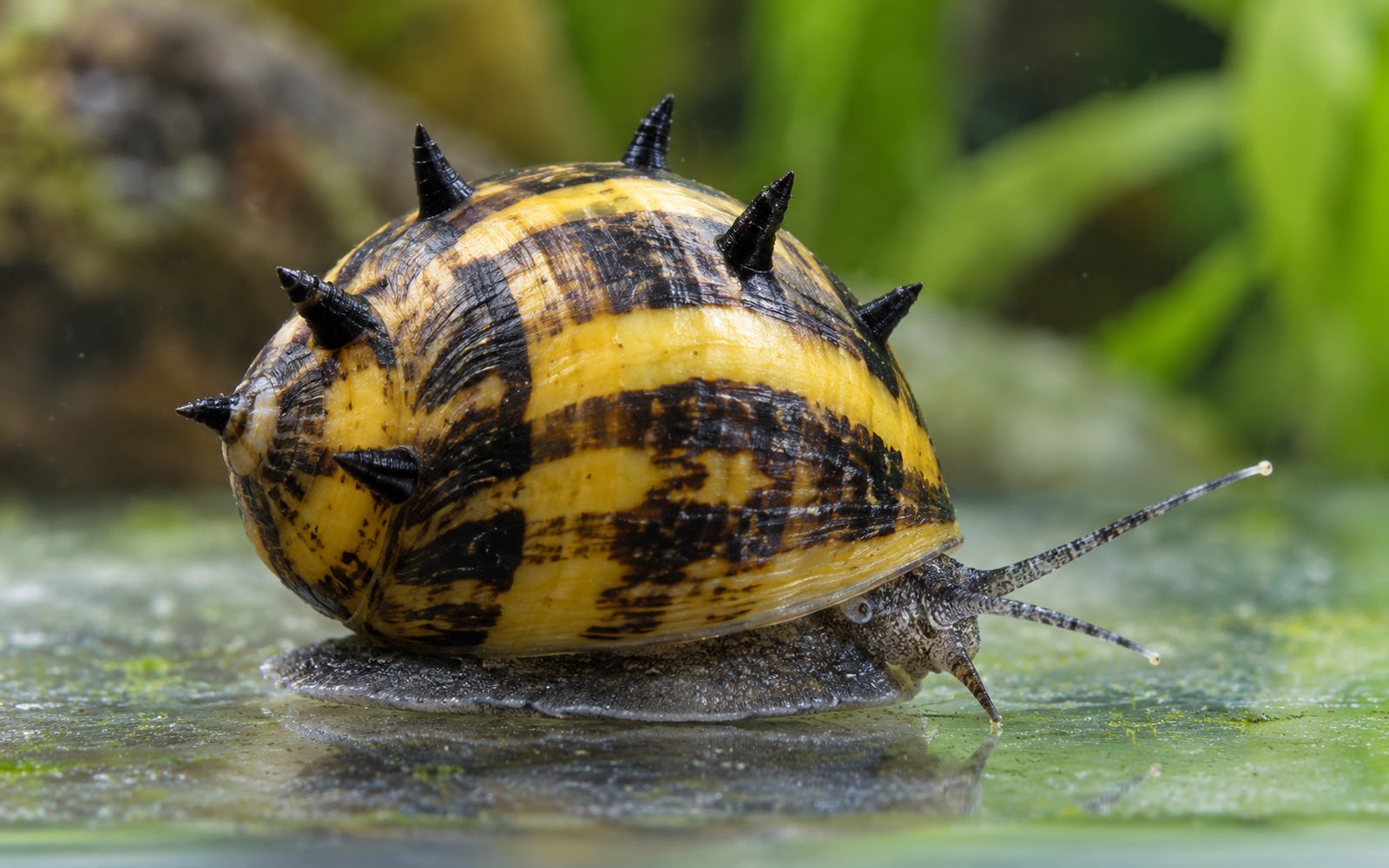 Horned Nerite Snail
Burdur Killifish
Horned Nerite Snail
Burdur Killifish
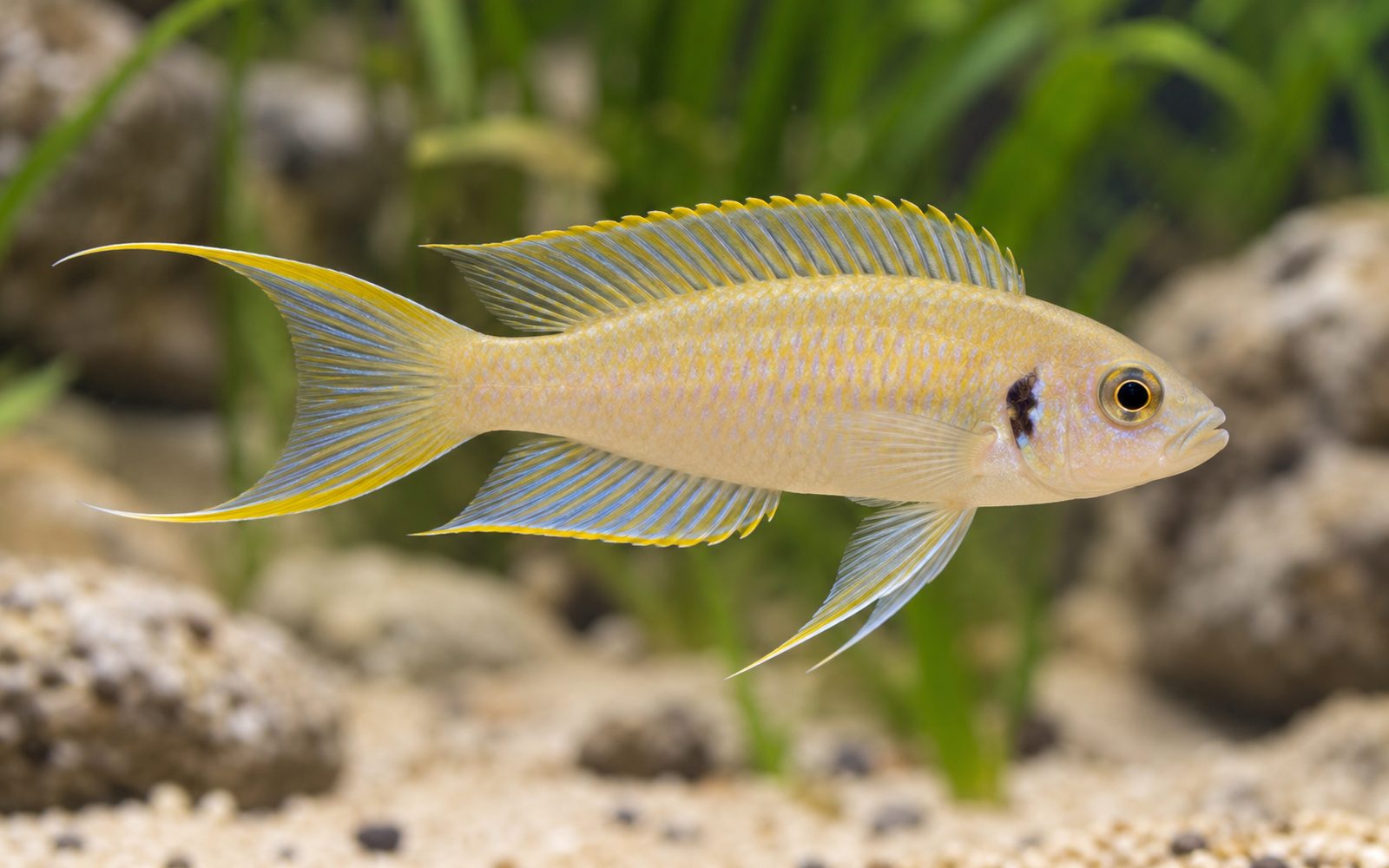 Daffodil Cichlid
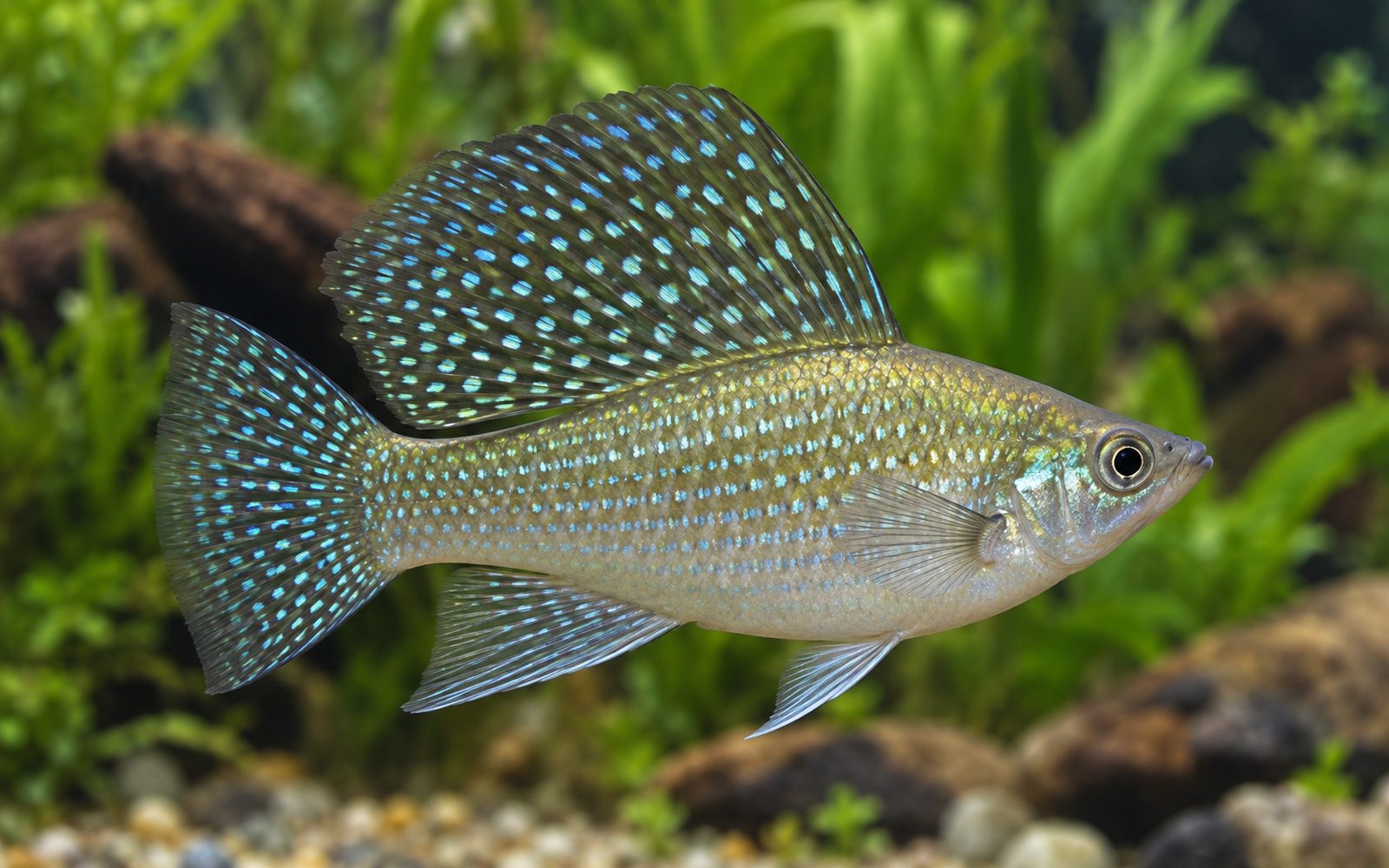 Giant Sailfin Molly
Enantiopus melanogenys
Giant Sailfin Molly
Enantiopus melanogenys
Should not be kept together






Hobbyist notes
Things you won't find in books, learned by trial and error. The most helpful ones are on top.
Change history and contributors
- Page created · October 16, 2026