
Water parameters
Overview
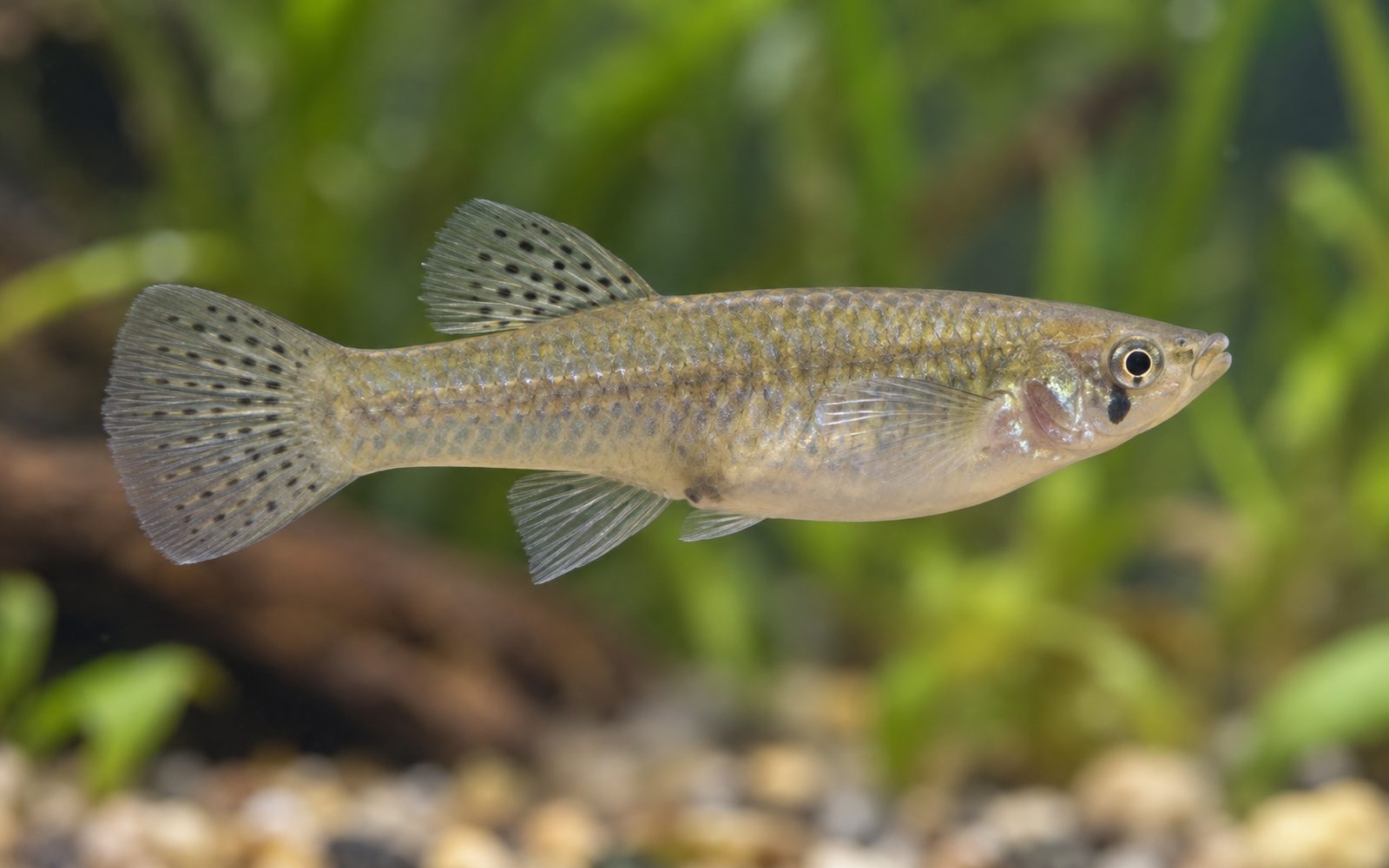
Because it eats mosquito larvae, the mosquitofish has been introduced to many countries around the world since the early 20th century to fight malaria. In Türkiye it was also released for this purpose and today has become established in many ponds, canals and wetlands. Its appearance is plain: an olive–gray semi-transparent body, an upturned mouth and a dark "teardrop" mark under the eye.
Invasive species warning: In most places it has not delivered the expected benefit against mosquito larvae; instead it has done serious damage by eating the eggs and fry of native fish and tadpoles. Its pressure on the toothcarps (Aphanius) endemic to Anatolia is well known. Individuals caught in the wild or bred in the aquarium must never be released into another body of water or moved from pond to pond.
Natural Habitat
Its natural range is the coastal plains of the eastern United States. It lives in planted, shallow, still or slow-flowing waters and is extraordinarily tolerant of changes in temperature, salinity and oxygen. This hardiness is the main reason it spreads quickly wherever it is introduced.
Tank Setup
- Volume: 60 liters for a small group.
- Water: 18–25°C is ideal; no heater is needed. It adapts to a very wide range of pH and hardness.
- Layout: a planted aquarium with the surface partly covered by floating plants. A lid is recommended.
- Note: if it is to be kept in an aquarium, the best option is a species-only aquarium.
Diet
Omnivorous but fond of animal foods. It readily accepts flakes, frozen and live mosquito larvae, daphnia, brine shrimp and bloodworms. In the wild it feeds on insects, small crustaceans, eggs and fish fry.
Behavior and Compatibility
Aggressive for its small size. It bites the fins of other fish and injures slow, long-finned species; females even eat their own fry. For this reason it is not suitable for community aquariums.
Good companions: a species-only aquarium is recommended.
Avoid: guppies, bettas and long-finned species, small and slow fish, shrimplets, native toothcarps such as Aphanius.
Group and Colony Structure
If kept in an aquarium, 3 or more females per male is suitable; males constantly follow the females. Females can be aggressive toward each other and especially toward fry. Because it breeds very quickly, population control is essential; surplus individuals should not be released into nature but given to people who keep them in closed systems.
Breeding
A livebearer. Gestation lasts about 3–4 weeks; the female gives birth to 20–80 fry at a time and can give birth many times in a row during the warm season. The fry mature within a few weeks. Adults hunt the fry intensively; without dense plants very few survive.
Health and Common Problems
Extremely hardy; the most common problems in the aquarium are fight wounds and the fungal infections that follow them. Wild-caught individuals may carry parasites; they should be kept separate so these do not spread to other aquariums.
Sexing
Males are small (3–3.5 cm) and slender, and their anal fin has been modified into a long gonopodium. Females are larger (5–6 cm) with a full belly and carry a distinct dark gravid spot at the rear of the belly.
Tank mates
This list is calculated automatically from the species profile and grows as new species are added to the catalog. Try it in the planner for a definite answer.
Usually compatible
 Yellow Regal Peacock
Glass Tetra
Yellow Regal Peacock
Glass Tetra
 Blackfin Corydoras
 Emerald Betta
 Emerald Cory
 Porthole Catfish
 Keyhole Cichlid
 Cupid Cichlid
 Buffalohead Cichlid
 Geophagus altifrons
Should not be kept together







Hobbyist notes
Things you won't find in books, learned by trial and error. The most helpful ones are on top.
Change history and contributors
- Page created · October 16, 2026