
Water parameters
Overview
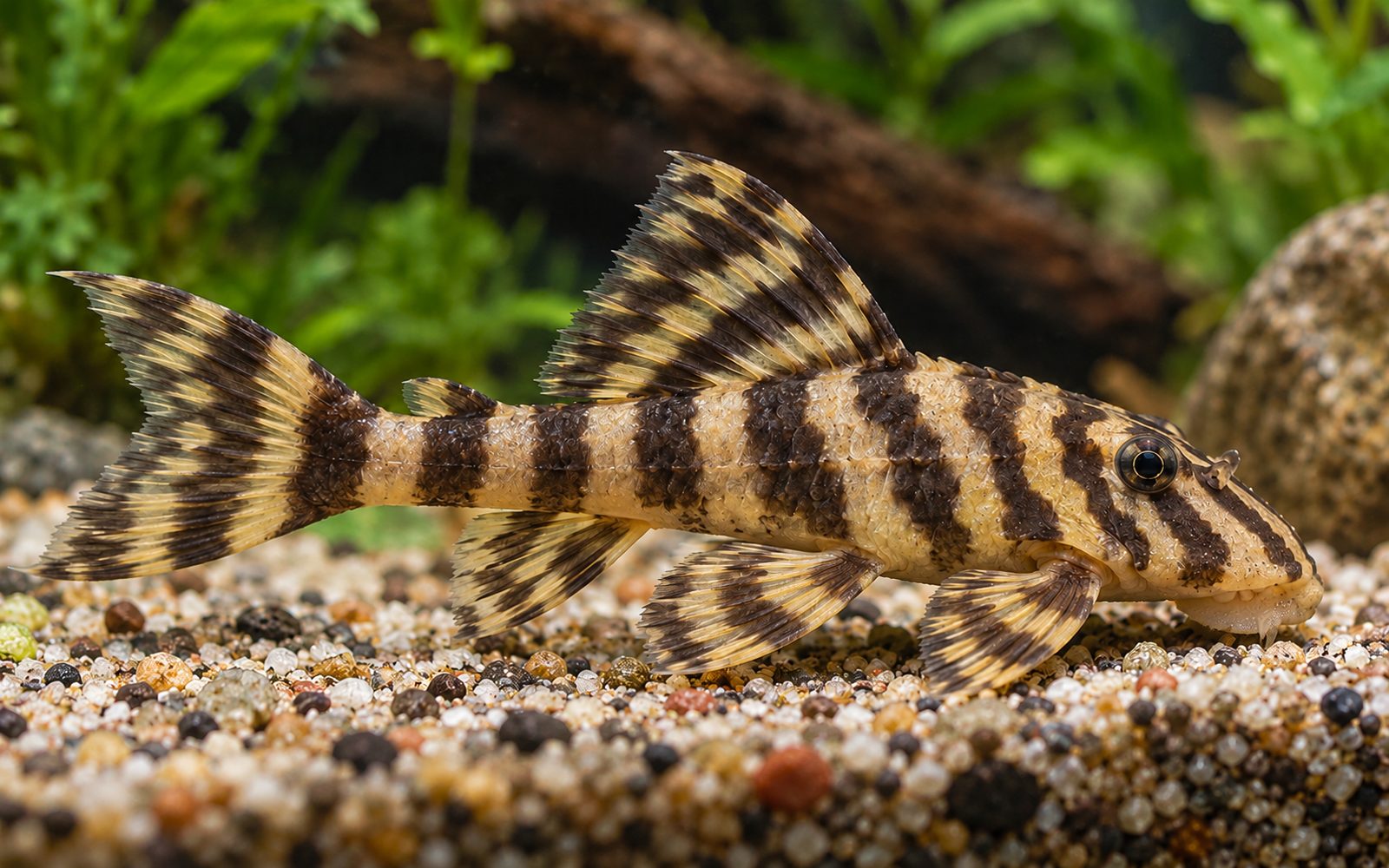
The candy striped pleco is a small Peckoltia known by the name "candy striped" because of the dark bands on its light background. It stays around 12 cm and is suitable for community aquariums. In hobby sources it was long confused with the clown pleco (Panaqolus maccus); whether the number L015 corresponds exactly to this species is also debated.
It is an omnivorous species: it accepts both vegetable-based and meaty foods and also rasps on wood. This flexibility makes it a good L-number pleco for beginners.
Natural Habitat
It lives among rocks, fallen trees and root tangles in flowing stretches of many rivers of the Brazilian Amazon, including the Xingu. The water is warm and oxygen-rich. It spends the day in narrow crevices and under roots, and in the dark searches surfaces for biofilm, small invertebrates and organic debris.
Tank Setup
- Volume: 100 liters for one or two individuals.
- Decor: Roots, caves, rock piles; a separate hiding place for each individual.
- Flow: Moderate flow, good aeration.
- Water: 26–28°C, with a 25–30% water change every week.
- Substrate: Fine sand or rounded gravel; since it feeds on the bottom, sharp gravel is not recommended.
Diet
Omnivorous. Alternate vegetable-based and protein-rich sinking wafers; add blanched zucchini, spinach and peas as well as frozen foods such as bloodworms and mysis. Having wood in the aquarium aids its digestion.
Behavior and Compatibility
Peaceful and nocturnal. It leaves other species alone; it has brief disputes over caves with males of its own kind. It generally does not damage plants.
Good companions: Tetras, rasboras, corydoras, dwarf cichlids, gouramis.
Avoid: Large cichlids that claim the bottom, large territorial plecos.
Group and Colony Structure
It can be kept on its own. For more than one individual, each should be given a separate cave and hiding place. Creating visual barriers with roots and stones so that males can claim their own corners without seeing each other noticeably reduces fighting.
Breeding
It breeds in caves; the male guards the eggs and fry. Breeding in the aquarium has been reported but is not common. To encourage breeding, provide plenty of oxygen, regular water changes and a cave sized to each male's body.
Health and Common Problems
Hardy. Dirty water and low oxygen are the most common sources of problems. Check the belly line of new individuals; a sunken belly is a sign of starvation. Since it is active at night, it is a good habit to check with a flashlight after the lights go off whether it is feeding. It is sensitive to copper.
Sexing
In mature males the odontodes on the pectoral fin spines and the rear part of the body are more prominent, and the head is wider. Females are plumper when viewed from above.
Tank mates
This list is calculated automatically from the species profile and grows as new species are added to the catalog. Try it in the planner for a definite answer.
Usually compatible
 Polystictus Corydoras
 Emerald Betta
 Emerald Cory
 Porthole Catfish
 Keyhole Cichlid
 Cupid Cichlid
 Buffalohead Cichlid
 Geophagus altifrons
 Geophagus surinamensis
Should not be kept together






Hobbyist notes
Things you won't find in books, learned by trial and error. The most helpful ones are on top.
Change history and contributors
- Page created · October 16, 2026