
Water parameters
Overview
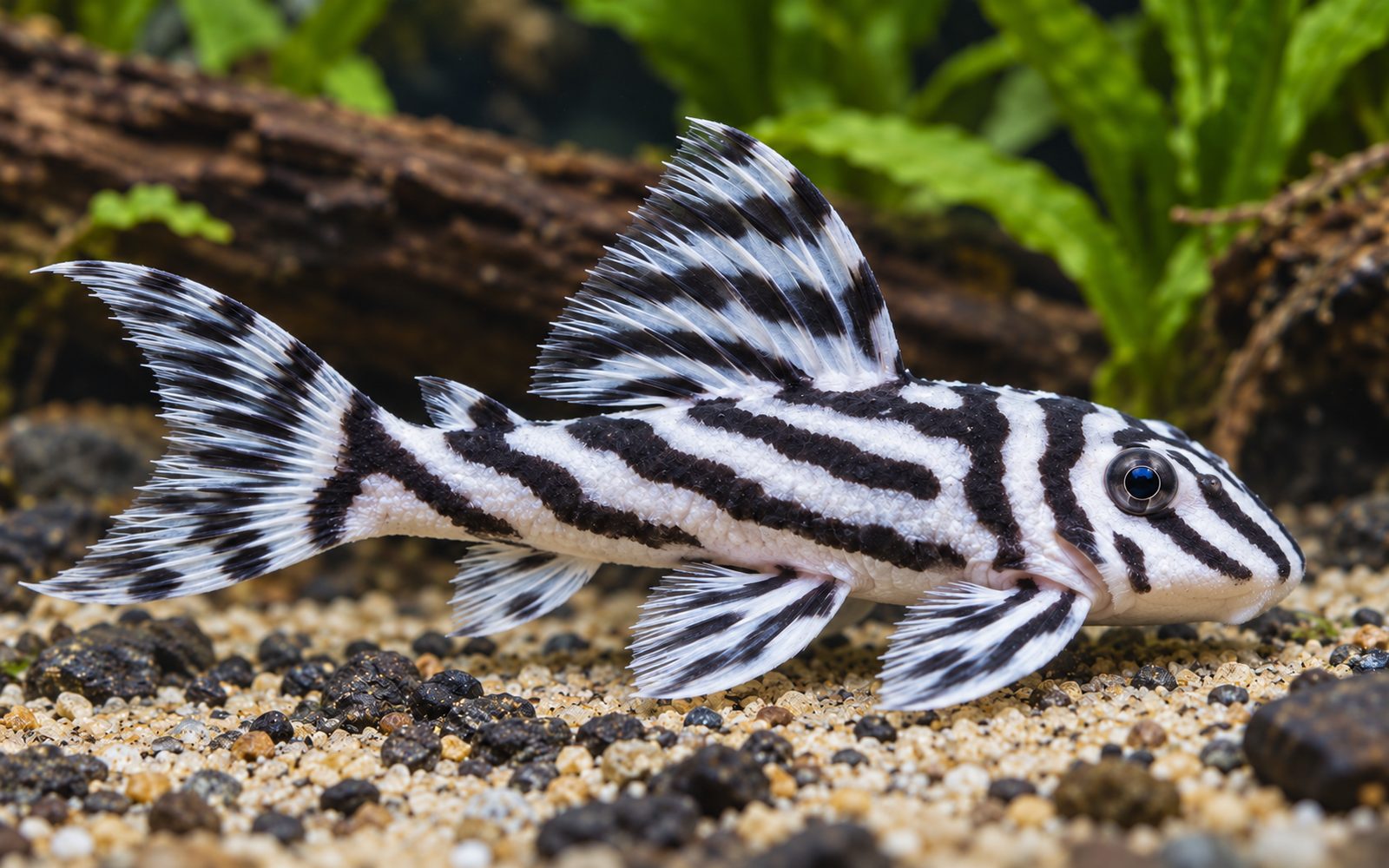
The zebra pleco is a small suckermouth catfish whose black-and-white striped pattern has made it the symbol of L-number plecos. It lives only in a short stretch of the Xingu River in Brazil. It is not an algae-eating "cleaner"; it is a specialist fish that feeds mainly on meaty foods and needs warm water with flow.
Because its natural habitat lies within the area affected by the Belo Monte dam complex, the species is seriously endangered. Brazil has banned the export of wild individuals since 2004, and the species has been added to the CITES list. When buying, make sure it is captive-bred and comes with documentation; stay away from cheap individuals said to be wild-caught.
Natural Habitat
It lives in rock crevices and among stone piles beneath clear, warm, fast-flowing water in the great bend of the Xingu known as the "Volta Grande." The water is extremely oxygen-rich, and the bottom is largely rock and sand.
Tank Setup
- Volume: At least 100 liters for a small group; footprint matters more than height.
- Flow and oxygen: An extra circulation pump and strong aeration are essential. This becomes even more important at 28–29°C, since the water holds less oxygen.
- Hiding: A narrow, long cave (clay tube, rock crevice) for each individual. Rock piles built from flat stones mimic the natural habitat.
- Water: A 30% water change every week; nitrate should be kept low.
Diet
Mainly carnivorous. Frozen bloodworms, mysis, brine shrimp, crumbled shrimp and protein-rich sinking granules or wafers should be the staple food. A vegetable wafer can be given now and then, but it does not rasp on wood. Since it is active at night, feeding after the lights go off keeps faster tankmates from snatching the food.
Behavior and Compatibility
Shy and nocturnal; during the first weeks it may hardly be seen at all. It leaves other fish alone, but males chase each other over caves. It is easily outcompeted for food by fast, greedy bottom dwellers.
Good companions: Calm species that like warm water: discus, cardinal and rummy-nose tetras, sterbai corydoras, dwarf cichlids.
Avoid: Other Hypancistrus species (they hybridize easily), large territorial plecos, aggressive cichlids, cold-water fish.
Group and Colony Structure
It can be kept on its own, but in a group of 3–6 individuals it becomes bolder and its behavior is easier to observe. There should be as many caves as males, or even a few more. Those who want to breed them usually start with a ratio of 1 male to 2 females.
Breeding
It breeds in caves. The female lays a small number of large eggs in the male's cave; the male guards the eggs and fry in the cave, fanning them with his fins. The fry leave the cave after using up their yolk sacs. Triggering breeding requires high oxygen, clean water and patient waiting; zebra plecos mature slowly.
Health and Common Problems
It is sensitive to nitrate buildup, low oxygen and sudden changes in parameters. Stressed individuals show bacterial infections and loss of appetite. Avoid copper-based medications. Check the belly line of an individual that has not been seen for a long time with a flashlight at night.
Sexing
Mature males have a wider head and longer pectoral fin spines and spine-like projections (odontodes) on the cheeks. Females are plumper in the belly when viewed from above.
Tank mates
This list is calculated automatically from the species profile and grows as new species are added to the catalog. Try it in the planner for a definite answer.
Usually compatible
 Emerald Betta
 Emerald Cory
 Keyhole Cichlid
 Cupid Cichlid
 Discus
 Geophagus altifrons
 Geophagus surinamensis
 Cryptocoryne Parva
 Gold Spot Pleco (L001)
African Red-eyed Tetra
Gold Spot Pleco (L001)
African Red-eyed Tetra
Should not be kept together






Hobbyist notes
Things you won't find in books, learned by trial and error. The most helpful ones are on top.
Change history and contributors
- Page created · October 16, 2026