
Water parameters
Overview
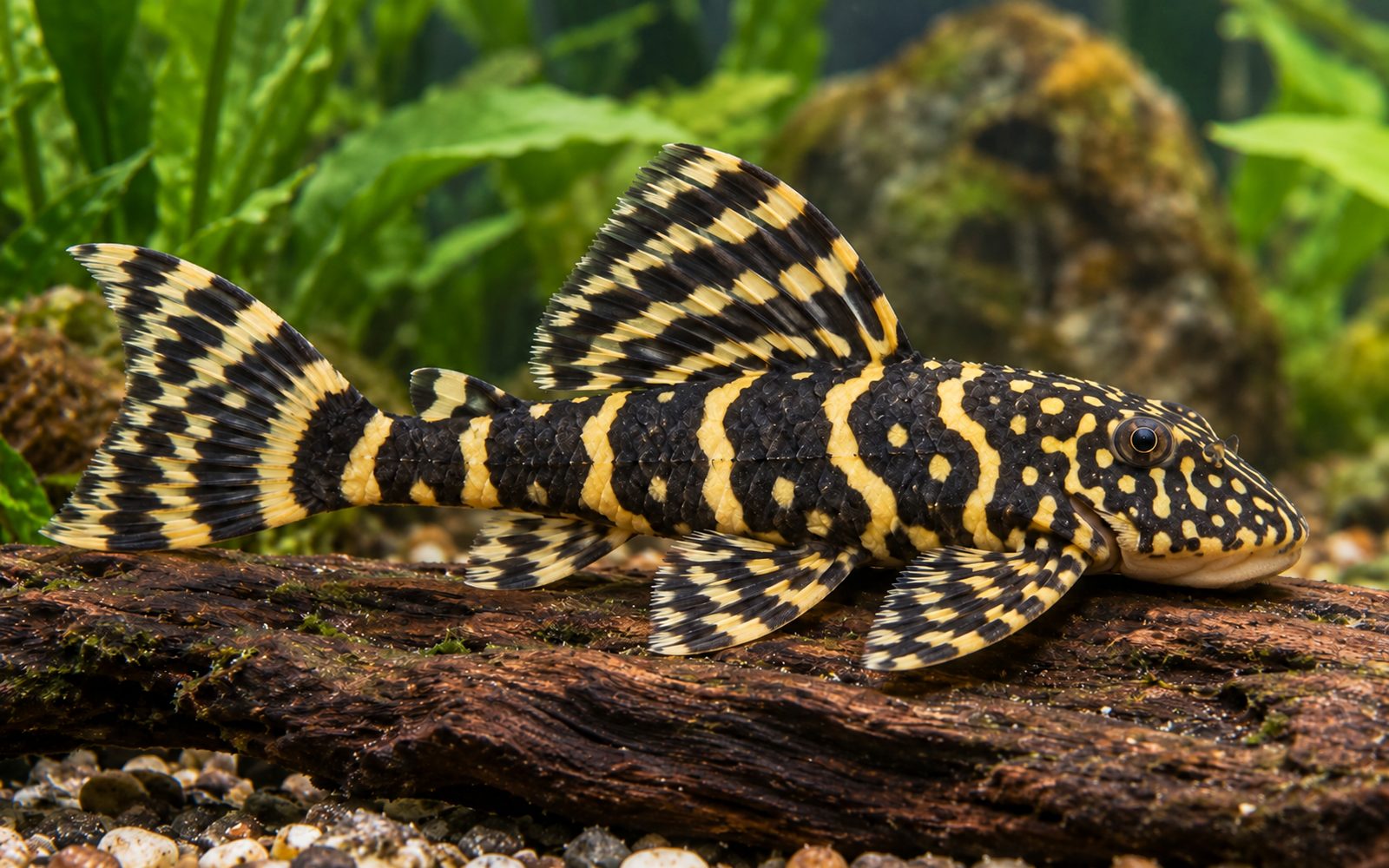
The leopard frog pleco, with its yellow-cream bands and spots on a black background, is one of the best-loved small plecos. It was sold for a long time under the number L134 and was later described as Peckoltia compta. Adults stay around 10 cm.
It is hardier and easier to feed than the zebra-like Hypancistrus species. Being omnivorous and accepting both vegetable-based and meaty foods makes its care easier. The only point to watch is that it needs warm, oxygenated water.
Natural Habitat
It lives in the fast-flowing, rocky stretches of the Tapajós River and its tributary, the Jamanxim. Rock crevices and the undersides of rocks are its shelter; the water is clear, warm and oxygen-rich. The species was scientifically described from specimens collected downstream of where the Tapajós meets the Jamanxim.
Tank Setup
- Volume: 100 liters for 1–3 individuals.
- Hiding: A cave or crevice for each individual; flat stones and roots.
- Flow: Moderate to strong flow and good aeration.
- Water: 27–29°C is ideal; a 25–30% water change every week.
- Substrate: Fine sand or rounded gravel.
Diet
Omnivorous. Frozen foods such as bloodworms, mysis and brine shrimp, along with vegetable-based and protein-rich sinking wafers, can be given in rotation. It also eats blanched zucchini and spinach. It may rasp on wood a little. Feed in the evening.
Behavior and Compatibility
Peaceful and quite nocturnal. Males chase each other over caves, but serious injuries are rare. It ignores other species and shrimp; only very small shrimplets may become food.
Good companions: Tetras, rasboras, sterbai corydoras, dwarf cichlids, discus.
Avoid: Aggressive cichlids, large territorial plecos, cool-water fish whose temperature needs do not match.
Group and Colony Structure
It can be kept singly. If kept in a group, provide more caves than there are males and create visual barriers. For breeding, 2 females per male is suitable. During the breeding season the females visit the males' caves; a male admits a female he finds suitable into his cave.
Breeding
It has been bred in the aquarium. The male claims his cave, the female lays her eggs there and the male guards the eggs until the fry hatch. The fry are raised on fine granules and crushed frozen food. Clay or stone tubes closed at one end and fitting the body snugly are preferred as caves; the male rarely leaves the cave during incubation.
Health and Common Problems
Hardy. Low oxygen and dirty water lead to loss of appetite and bacterial infections. Avoid copper-based medications; observe a new individual in quarantine first.
Sexing
Mature males have prominent odontodes on the pectoral fin spines and the rear part of the body, and a wider head. Females are plumper when viewed from above.
Tank mates
This list is calculated automatically from the species profile and grows as new species are added to the catalog. Try it in the planner for a definite answer.
Usually compatible
 Emerald Betta
 Emerald Cory
 Keyhole Cichlid
 Cupid Cichlid
 Discus
 Geophagus altifrons
 Geophagus surinamensis
 Cryptocoryne Parva
 Gold Spot Pleco (L001)
Should not be kept together






Hobbyist notes
Things you won't find in books, learned by trial and error. The most helpful ones are on top.
Change history and contributors
- Page created · October 16, 2026