
Water parameters
Overview
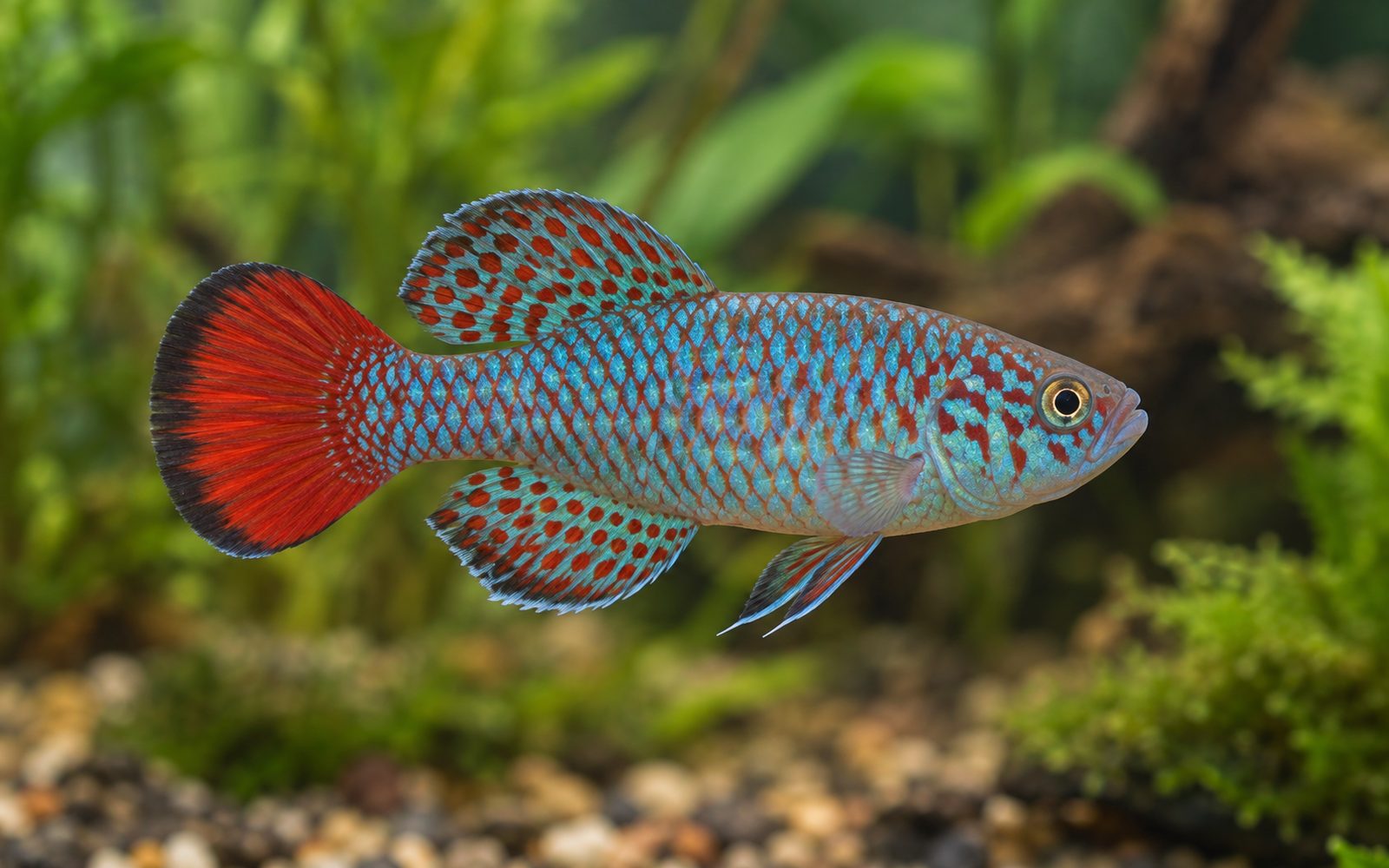
Nothobranchius guentheri is usually the first choice for those who want to try annual killifish. The male's turquoise-green body is patterned like a net by red-brown scale edges; the tail fin is bright red. Females are a drab gray-brown.
Like all annual species, in the wild it lives through a single rainy season: it hatches when the temporary pools fill, matures in a few weeks, lays its eggs in the mud on the bottom and dies when the pool dries out. In the aquarium it usually lives 12–18 months. Keeping the species going depends on regularly collecting the eggs and storing them in damp peat.
Natural Habitat
It lives in shallow rain-filled depressions, ditches and swamp margins on the coastal plains of Tanzania facing the Indian Ocean and on the island of Zanzibar. These pools dry out completely in the dry season; the water is usually murky, soft and warm.
Tank Setup
- Volume: 30–40 liters for one male and two to three females; a species tank is recommended.
- Substrate: Bare bottom or fine dark sand; a small container filled with boiled peat for spawning.
- Water: 22–25°C, soft to moderately hard. An air-driven sponge filter; no strong flow.
- Lid: A tight lid is essential.
- Maintenance: 30% water change weekly and siphoning debris from the bottom.
Diet
Carnivorous and a big eater. Live and frozen foods should be the staple: bloodworms, daphnia, mosquito larvae, brine shrimp. Some individuals accept dry food, but it is not enough on its own. Fast-growing juveniles should be fed small amounts two to three times a day.
Behavior and Compatibility
Males are active, showy and rough with each other. They constantly chase the females. With its short life and special breeding routine, it does best in a species tank.
Good companions: females of its own species. If desired, calm, small bottom dwellers suited to cool water; but a species tank is best.
Avoid: other Nothobranchius species (the females look very similar and hybridization occurs), fin nippers, large and active fish.
Group and Colony Structure
Two to three females per male are recommended. Males can wear each other down badly in a small aquarium; more than one male should only be kept in a spacious aquarium divided with plants.
Breeding
The pair dives into the peat and buries its eggs. Care steps:
- Collecting: The peat is removed every 1–2 weeks, drained and squeezed to a damp consistency.
- Storage: It is kept in a labeled zip-lock bag at 20–24°C in the dark. It is checked once a month and moistened with a few drops of water if it has dried out.
- Duration: about 2–4 months. When dark eyes become visible in the egg, it is ready for wetting.
- Wetting: The peat is placed in cool (18–20°C), soft, shallow water; the fry hatch within a few hours. Eggs that do not hatch are dried again and tried a few weeks later.
The fry take newly hatched brine shrimp from the first day. They grow very fast and start spawning at 6–8 weeks. Keeping the water level at 3–5 cm in the first days after wetting reduces the number of fry that cannot fill their swim bladder.
Health and Common Problems
- Natural aging: After one year of age, fading color, weight loss and a hunched back are to be expected.
- Velvet (Oodinium): common in this species. Adding up to 1 gram of salt per liter of water in a species tank is a widespread precaution.
- Leftover food and dirty water make problems escalate very quickly in these short-lived species.
Sexing
Males have a turquoise body, a red tail and colorful fins; females are gray-brown with transparent, colorless fins. Males are slightly larger and have broader fins.
Tank mates
This list is calculated automatically from the species profile and grows as new species are added to the catalog. Try it in the planner for a definite answer.
Usually compatible
 Emerald Betta
 Emerald Cory
 Porthole Catfish
 Keyhole Cichlid
 Buffalohead Cichlid
 Geophagus surinamensis
 Rainbow Cichlid
 Gymnogeophagus balzanii
 Blood Parrot
Should not be kept together






Hobbyist notes
Things you won't find in books, learned by trial and error. The most helpful ones are on top.
Change history and contributors
- Page created · October 16, 2026