
Water parameters
Overview
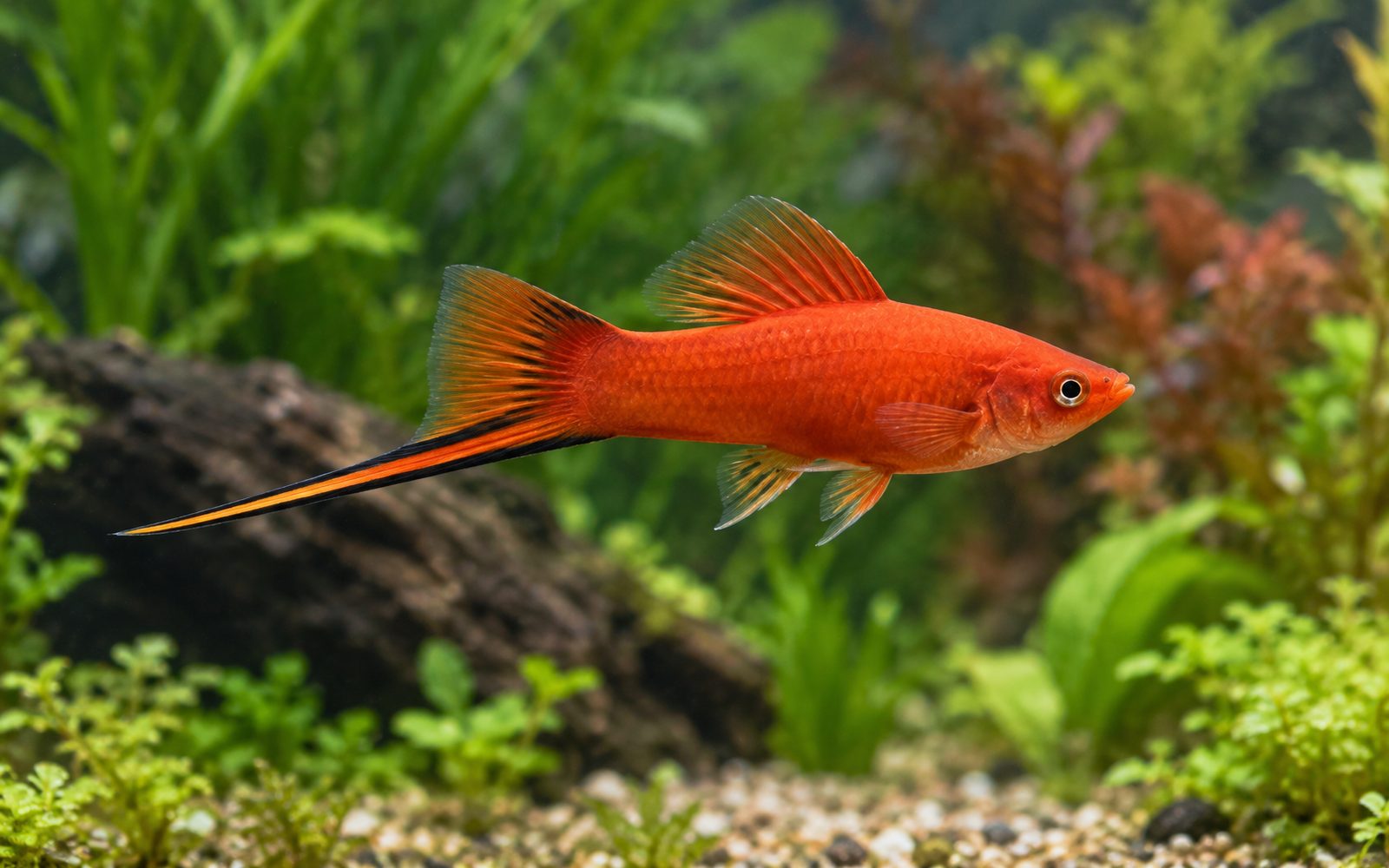
The swordtail is recognized by the sword-shaped extension that grows from the lower rays of the male's tail fin. Red, green (the wild form), black and "tuxedo" varieties are common. It is a close relative of the platy but longer, faster and more active.
Natural Habitat
It lives in fast-flowing, planted streams and riverbanks in Central America. Because it is used to flowing water, it enjoys the moderate current created by a filter.
Tank Setup
- Volume: at least 100 liters and 80 cm in length; males are fast swimmers.
- Water: 23–26°C, pH 7–8, moderately hard to hard water.
- Lid: swordtails jump, especially when frightened or chased. The lid must be kept closed.
- Decor: plants along the edges, open swimming space in the middle.
Diet
Omnivorous: flakes and granules, spirulina food, vegetables and live/frozen foods (brine shrimp, daphnia, bloodworms).
Behavior and Compatibility
Generally peaceful, but males can be aggressive toward each other; in a cramped aquarium the dominant male constantly chases the others. One male with 2–3 females, or a large aquarium with 3 or more males (to spread out aggression), is recommended.
Good companions: platies, mollies, zebra danios, corydoras, Ancistrus, larger tetras.
Avoid: very small and shy fish (its activity stresses them), species that need soft water.
Group and Colony Structure
Swordtail males can be aggressive toward each other. There are two safe setups:
- One male with 3–4 females (100 liters or more).
- In a large aquarium (150 liters or more), spreading out aggression with 3 or more males.
A small group with two males is the most problematic setup: the dominant male constantly chases the other. Having more females spreads out the males' attention and keeps the females from becoming exhausted.
Breeding
Gestation lasts 4–6 weeks; the female can give birth to 20–100 fry. Cases of "sex change", in which older females acquire male characteristics, have been recorded in swordtails; this is related to changes in hormone levels.
Health and Common Problems
Hardy. Tail rot, white spot and columnaris may appear in poor water conditions. Jumping out of the aquarium is one of the most common causes of loss.
Sexing
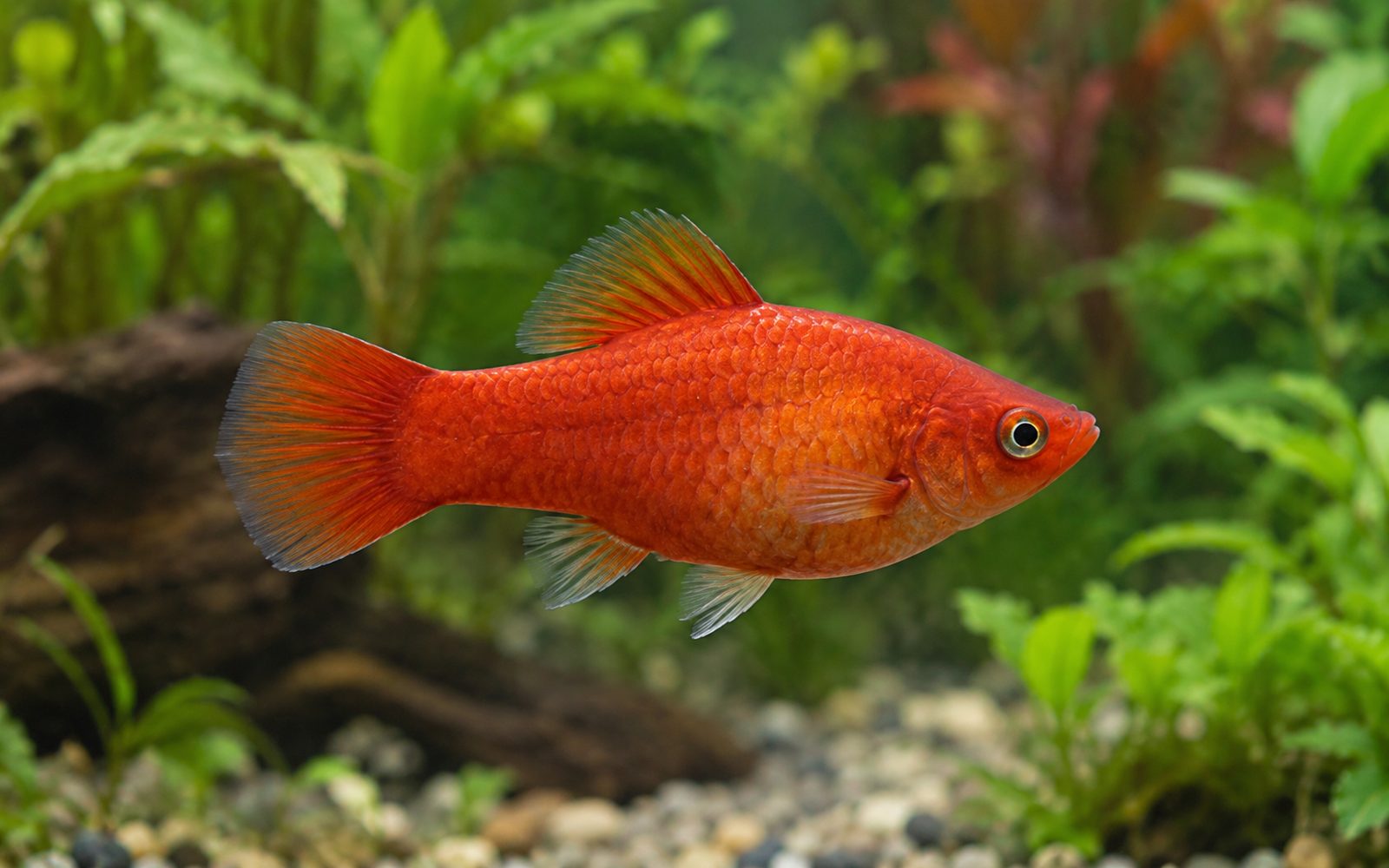
The male has the sword extension and a gonopodium. The female is larger and plumper and has no sword. In young males the sword may appear late, so juveniles can be mistaken for females.
Tank mates
This list is calculated automatically from the species profile and grows as new species are added to the catalog. Try it in the planner for a definite answer.
Usually compatible
 Flame Tetra
 Yellow Regal Peacock
Glass Tetra
Yellow Regal Peacock
Glass Tetra
 Blackfin Corydoras
 Polystictus Corydoras
 Emerald Betta
 Emerald Cory
 Emerald Dwarf Rasbora
 Porthole Catfish
 Keyhole Cichlid
Should not be kept together






Hobbyist notes
Things you won't find in books, learned by trial and error. The most helpful ones are on top.
Change history and contributors
- Page created · October 16, 2026