
Water parameters
Overview
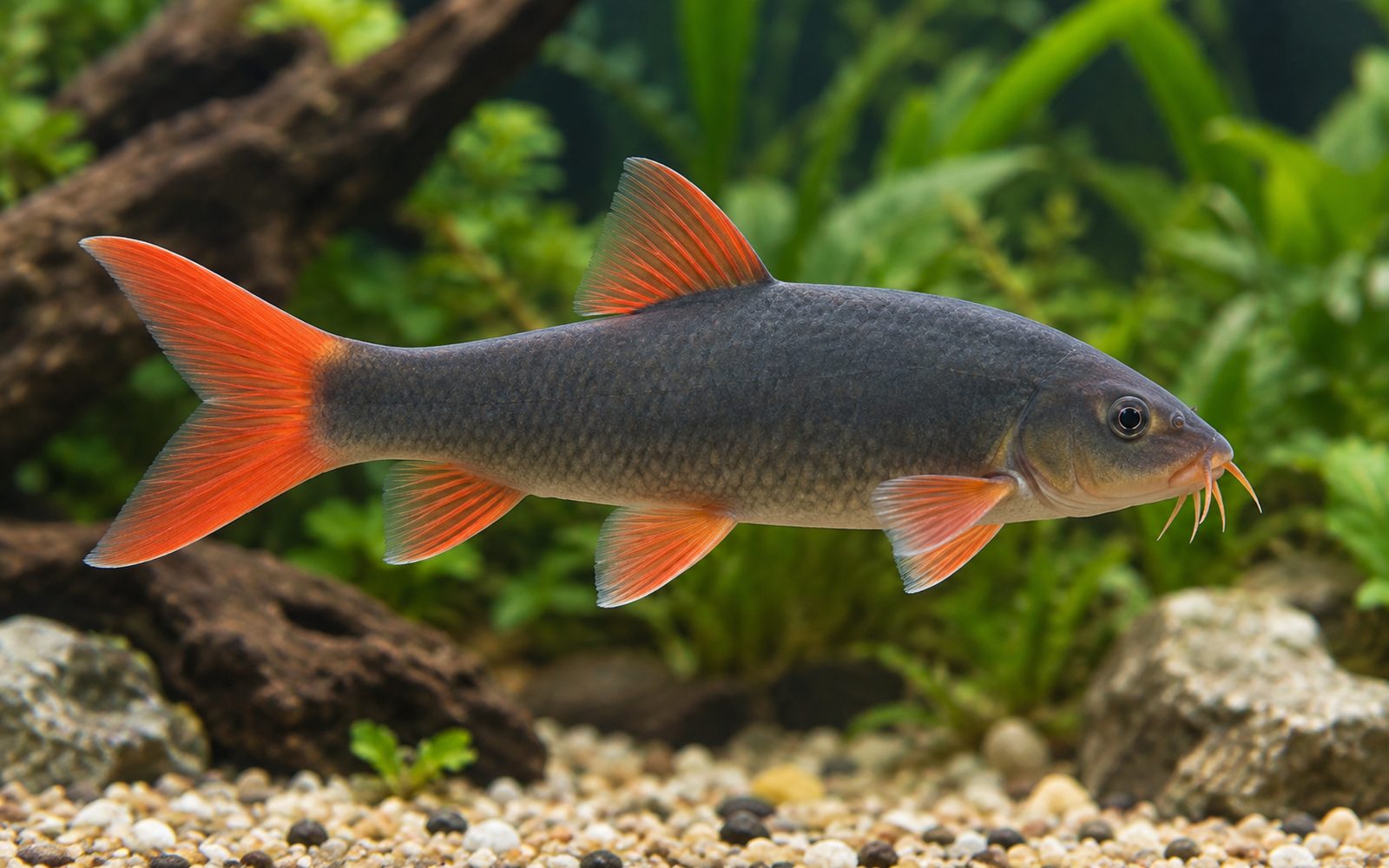
The blue botia is known for the simple but striking look created by its unpatterned bluish gray body and bright orange-red fins. Juveniles have dark vertical bands on the sides, which fade as they mature. During rank fights the fish may temporarily pale or their pattern may become more distinct.
It is sold small in stores but can reach 20 cm, and 25 cm in good conditions. In the trade you may come across color-injected or dyed fish sold as "blueberry" or "raspberry"; this practice harms the fish and should not be supported.
Natural Habitat
It lives in the middle and lower Mekong basin and in Thailand's Chao Phraya and Mae Klong rivers. It is found in main river channels and their branches, in rocky and sandy areas; in the rainy season it migrates into flooded areas.
Tank Setup
- Volume: at least 300 liters and 150 cm of length for an adult group.
- Water: 24–28°C, pH 6–7.5. Clean, well-oxygenated water; a 30% water change every week.
- Flow: Moderate to strong flow, plenty of aeration.
- Decor: Many caves, roots and piles of stones. Decor that breaks lines of sight reduces territorial fights.
- Lid: A tight lid is essential.
Diet
An omnivore leaning toward meaty foods, with a hearty appetite. Offer sinking granules and tablets, frozen bloodworms, tubifex, brine shrimp, mysis and blanched vegetables. It hunts snails and shrimp. It may nibble soft-leaved plants; in a planted aquarium, tough-leaved species such as anubias and java fern should be preferred.
Behavior and Compatibility
It is tougher than other botias: it claims its hiding place, chases its tankmates and may nip long fins. It gets along well with fast, robust fish. It is more active at night.
Good companions: large barbs, devarios, large danio species, big botias such as the clown loach, large and active tetras.
Avoid: snails, shrimp, slow long-finned fish such as angelfish and bettas, small and timid species.
Group and Colony Structure
The blue botia must be kept in a group: at least 5–6, ideally 8–10 individuals. Small groups of one to three either become stressed or turn their aggression on other fish. In a large group the fights stay among themselves and are mostly harmless. As the group grows, the aquarium must grow too.
Breeding
Breeding in the aquarium is not known. Most of those in the trade are collected from the wild, especially from rivers in Thailand.
Health and Common Problems
- White spot: Common in newly arrived fish; quarantine is essential.
- Medication sensitivity: It has small scales; start medications at half the dose.
- Injury: Torn fins can occur in rank fights; they heal quickly in clean water.
Sexing
Mature females have a fuller body and are slightly larger. There is no other reliable external difference.
Tank mates
This list is calculated automatically from the species profile and grows as new species are added to the catalog. Try it in the planner for a definite answer.
Usually compatible
 Emerald Betta
 Firemouth Cichlid
 Buffalohead Cichlid
 Chocolate Cichlid
 Geophagus altifrons
 Geophagus surinamensis
 Rainbow Cichlid
 Gymnogeophagus balzanii
 Pearl Cichlid
Should not be kept together




Hobbyist notes
Things you won't find in books, learned by trial and error. The most helpful ones are on top.
Change history and contributors
- Page created · October 16, 2026