
Water parameters
Overview
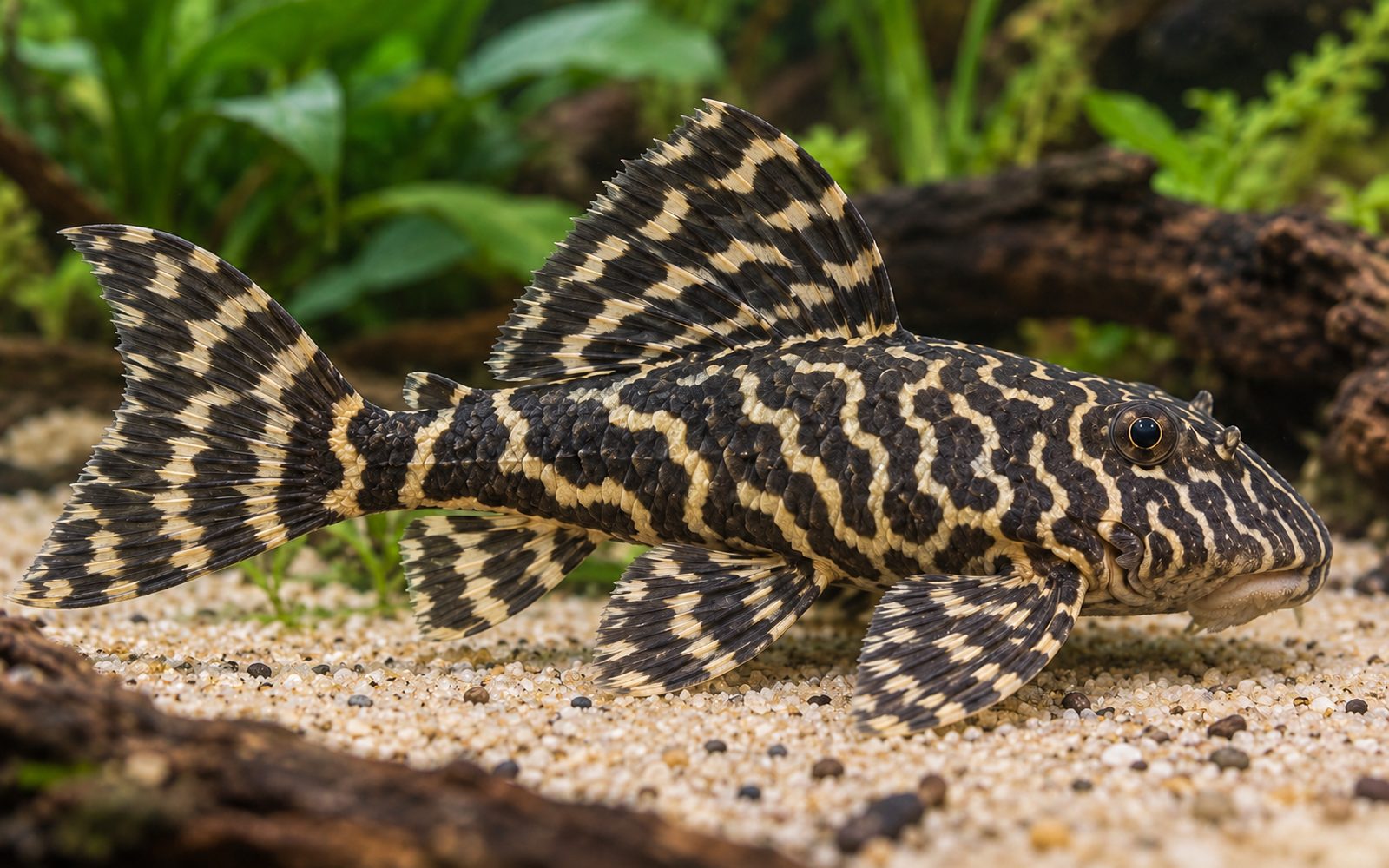
The king tiger pleco is a Hypancistrus with very high pattern variability that was known in the hobby for many years only by its L-number. A study published in 2025 showed that the forms sold under the numbers L066, L333, L236, L287, L399 and L400 belong to the same variable species, which was given the name Hypancistrus seideli. The name honors Ingo Seidel, an aquarist who has worked on plecos.
It is larger and hardier than the zebra pleco; captive-bred individuals are regularly available. Its care is very similar to that of the zebra pleco: warm, clean, oxygenated water and a mainly meaty diet.
Color and Fin Varieties
- L066 (king tiger): Fine, dense, winding light lines on a dark background.
- L333 (yellow king tiger): Thick dark lines on a more yellowish background; known from the lower Xingu.
- L236 ("super white"): A rare, expensive form in which the white background dominates.
These forms are natural local variants; since they hybridize easily with each other, keeping them separate is recommended.
Natural Habitat
It lives in crevices and hollows between stones in the rocky sections of the fast-flowing main channel in the lower reaches of the Xingu. The water is clear, warm and oxygen-rich.
Tank Setup
- Volume: At least 150 liters for 1–3 individuals, with a large footprint.
- Flow: An extra circulation pump and strong aeration.
- Cave: A separate cave for each male; rock piles built from flat stones and clay tubes.
- Water: 27–29°C is ideal; a 30% water change every week, low nitrate.
Diet
A mainly carnivorous omnivore. Bloodworms, mysis, brine shrimp, shrimp pieces and protein-rich sinking granules should be the staple; vegetable-based wafers can be added a few times a week. It feeds at night; give food after the lights go off.
Behavior and Compatibility
It is peaceful toward other species; it hides in its cave during the day and comes out at dusk. Males chase each other over caves, but serious injuries are rare.
Good companions: Calm species that like warm water, such as discus, cardinal tetras, rummy-nose tetras, sterbai corydoras and dwarf cichlids.
Avoid: Other Hypancistrus species and different L066 forms (they hybridize), large territorial plecos, aggressive cichlids.
Group and Colony Structure
It can be kept on its own. If kept in a group, each male needs a separate cave and hiding places in different corners of the aquarium. For breeding, start with 1 male and 2 females.
Breeding
It breeds regularly in the aquarium. The female lays a cluster of large eggs in the male's cave; the male guards and fans the eggs and fry in the cave. The fry emerge once the yolk sac is used up and accept fine powdered food, micro granules and crushed frozen foods.
Health and Common Problems
It is a hardy Hypancistrus, but low oxygen and nitrate buildup lead to loss of appetite and bacterial infections. Avoid copper-based medications.
Sexing
Males have a wider head; the pectoral fin spine and the odontodes on the cheeks are longer. Females are plumper when viewed from above.
Tank mates
This list is calculated automatically from the species profile and grows as new species are added to the catalog. Try it in the planner for a definite answer.
Usually compatible
 Emerald Betta
 Emerald Cory
 Keyhole Cichlid
 Cupid Cichlid
 Buffalohead Cichlid
 Discus
 Geophagus altifrons
 Geophagus surinamensis
 Rainbow Cichlid
Should not be kept together






Hobbyist notes
Things you won't find in books, learned by trial and error. The most helpful ones are on top.
Change history and contributors
- Page created · October 16, 2026