
Water parameters
Overview
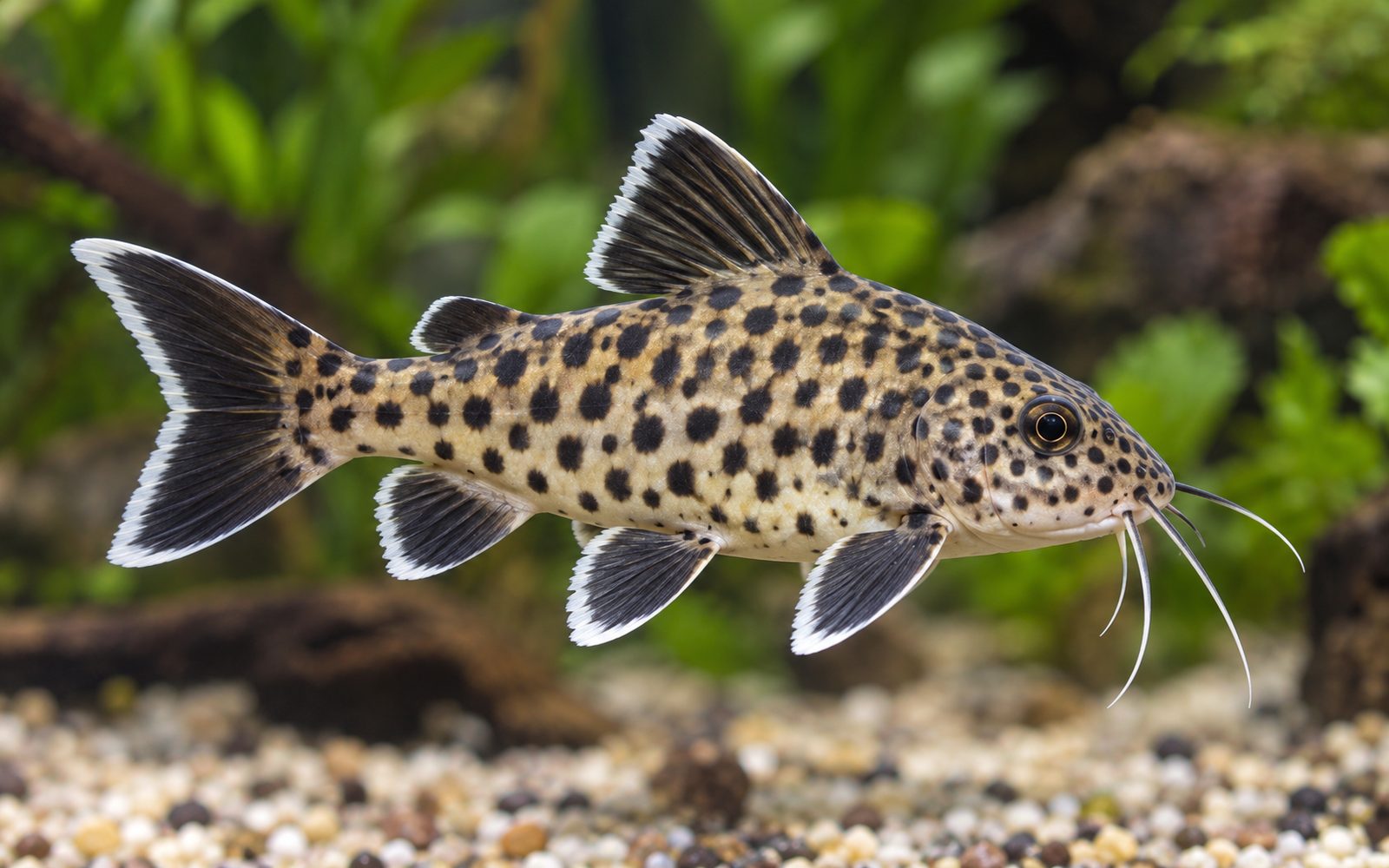
Synodontis petricola is a small Synodontis species found only in Lake Tanganyika. It is easy to spot with its large, regular black spots on a pale beige background and its dark fins with white edges. Like other members of the family Mochokidae, it produces a faint creaking sound by rubbing the hard spine of its pectoral fin in its joint socket; this is why the family is called "squeakers" in English.
Some of the fish sold as petricola are actually the very similar Synodontis lucipinnis or farm-produced hybrids. Since their care is almost identical, this confusion is not a big problem for hobbyists; however, those who want to breed them need to be aware of it.
Natural Habitat
It lives in the lake's rocky shore zones, among rock piles and rock cracks. It spends the day in narrow crevices and at dusk searches sand and stone surfaces for small invertebrates. Tanganyika's water is very hard, with a pH close to 9, and extremely stable all year round; the species is accustomed to this stability.
Tank Setup
- Volume: at least 150 liters and 100 cm of length for a group of 4–6.
- Decor: caves and crevices made of stacked stones; at least one hiding place per fish. A fine sand substrate protects the barbels.
- Water: 24–27°C, pH 7.8–9.0, hard water. The same values as a Tanganyika or Malawi aquarium are suitable.
- Filter: strong filtration and well-oxygenated water; a 20–30% water change every week.
- Lighting: normal lighting is not a problem; when there is enough shade it roams during the day as well.
Diet
Omnivorous and quickly takes to food. Make sinking granules and tablets the staple; vary the diet with frozen bloodworms, brine shrimp, mysis shrimp and spirulina tablets. When it is kept with fast-eating cichlids, giving part of the food after the lights go out ensures the catfish get enough too.
Behavior and Compatibility
Peaceful but not shy; it holds its own among active cichlids such as mbuna. Kept in a group, it is seen out in the open during the day too, foraging along the bottom in small clusters. There are brief scuffles among them over caves, but serious injuries are rare. Whenever it gets the chance, it eats eggs, newly hatched fry and dwarf shrimp.
Good companions: Tanganyika cichlids (Neolamprologus, Julidochromis, Cyprichromis), Malawi mbuna and Aulonocara, other Synodontis species that need the same water parameters.
Avoid: species that need soft, acidic water, dwarf shrimp; large species that aggressively claim the bottom.
Group and Colony Structure
The petricola lives in a loose group: at least 3, ideally 5–6 individuals. A petricola kept alone spends most of the day hiding; as the group grows, its boldness and visibility increase. The sex ratio does not matter. Scuffles decrease if there are enough caves for every individual. Setting up the group at once instead of adding fish one by one makes it easier for them to get along.
Breeding
It breeds occasionally in the aquarium. Spawning usually takes place at night, between stones or inside a cave; the fish scatter their eggs and give no care. The eggs are quickly eaten by other fish and even by the parents; those who want fry move the eggs to a separate container. The fry are first fed baby brine shrimp and fine powdered food. Most of the fish in stores are produced on commercial farms with hormone treatment.
Health and Common Problems
- Barbel erosion: sharp gravel or a dirty substrate wears down the barbels and leaves them open to infection; fine sand and a clean bottom are essential.
- Scaleless skin: it is sensitive to copper-based and strong medications; treatment should start at a low dose.
- Spines: the dorsal and pectoral spines get caught in nets; catching the fish with a container is safer.
- It is hardy in suitable water and can live more than 10 years.
Sexing
Mature males have a pointed, prominent genital papilla right behind the vent; in females this projection is blunt and rounded. Females are usually slightly larger with a fuller belly. Sexing is easiest when the fish is examined from below in a clear container.
Tank mates
This list is calculated automatically from the species profile and grows as new species are added to the catalog. Try it in the planner for a definite answer.
Usually compatible
 Egyptian Mouthbrooder
Amazon Molly
Egyptian Mouthbrooder
Amazon Molly
 Butterfly Goodeid
American Flagfish
Anatolian Killifish
Butterfly Goodeid
American Flagfish
Anatolian Killifish
 Anubias Angustifolia
 Anubias Barteri
 Anubias Caladiifolia
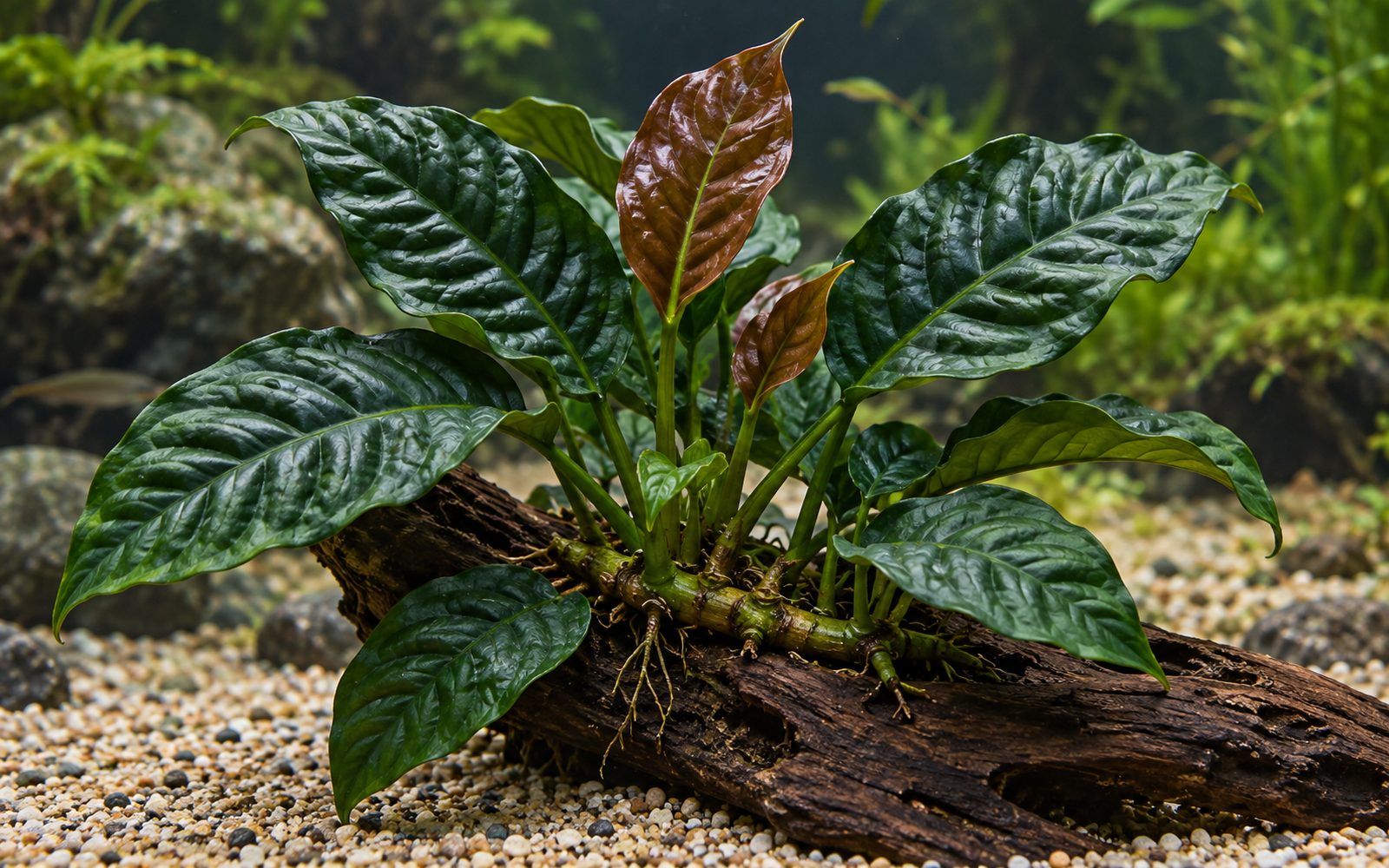 Anubias Coffeefolia
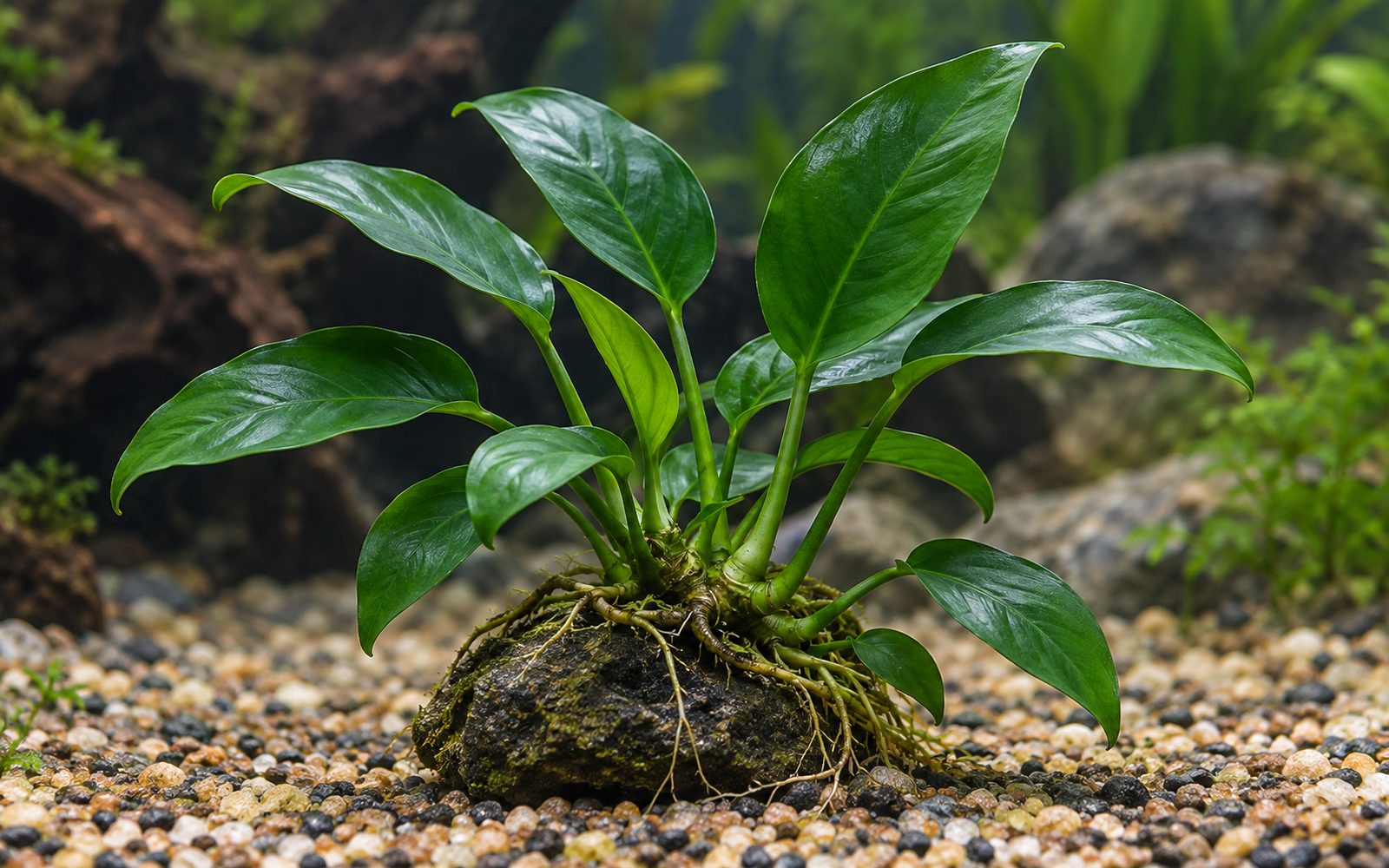 Anubias Glabra
Should not be kept together







Hobbyist notes
Things you won't find in books, learned by trial and error. The most helpful ones are on top.
Change history and contributors
- Page created · October 16, 2026