
Water parameters
Overview
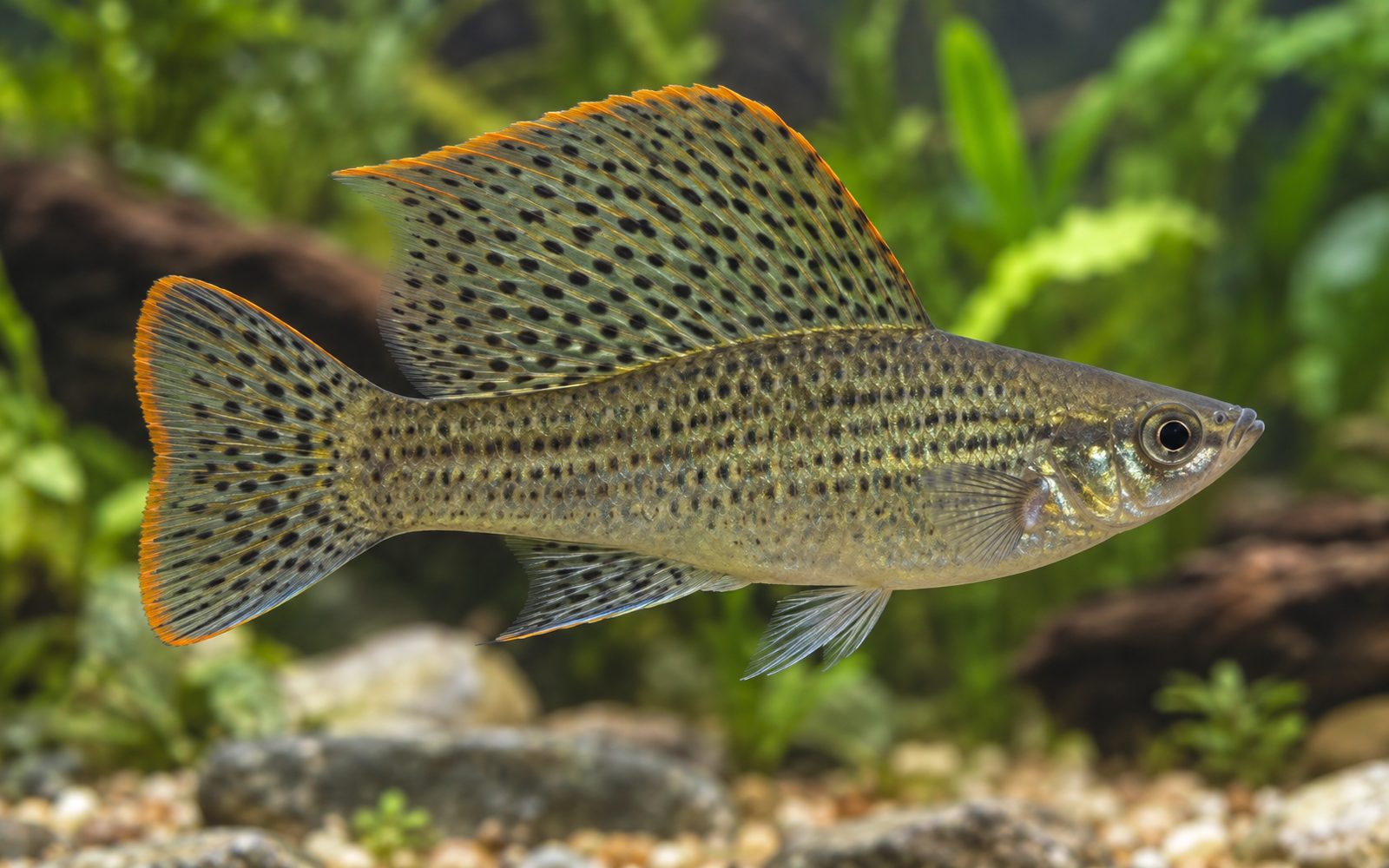
The sailfin molly is one of the sail-finned ancestors of the fish sold in stores as "mollies". The adult male's dorsal fin starts just behind the head, extends to the caudal peduncle and opens like a flag during courtship. The wild form is olive–silver with rows of spots; in stores, black, gold, dalmatian and white color varieties are more common. Some of the sail-finned fish sold are hybrids with Poecilia velifera and P. sphenops.
It is noticeably larger than the guppy and platy, and it is one of the first livebearers to run into problems in soft, acidic or dirty water.
Color and Fin Varieties
- Black sailfin molly: the most common, velvet-black form.
- Gold and lemon sailfin: forms in yellow–orange tones; some have red eyes.
- Dalmatian: a form with black spots on a white background.
- Balloon: a form with a short, chubby body; because the shape of the spine is deformed, it is a weak swimmer and more delicate.
Natural Habitat
In the wild it lives along the southeastern coastline of the United States and around the Gulf of Mexico over a wide range of habitats, from freshwater canals to salt marshes and lagoons. It prefers shallow, planted, sunlit waters that get quite warm in summer; its tolerance of salinity is very high.
Tank Setup
- Volume: at least 150 liters and a 100 cm tank length for a small group. In males growing up in a cramped aquarium the sail often does not develop fully.
- Water: 24–27°C, pH 7.5–8.5, hard water. Mineral supplementation is needed in areas with soft water.
- Salt: not essential; 1–3 g of sea salt per liter increases hardiness. If salt is to be added, consider whether the companion species and plants can tolerate it.
- Cleanliness: sensitive to dirty water; a 25–30% water change every week and a strong filter are needed.
- Layout: plenty of swimming space in the middle, tough-leaved plants along the edges; stones that grow algae provide grazing surfaces.
Diet
An omnivore with a mainly plant-based diet; in the wild it grazes algae and organic sediment on the bottom. Spirulina flakes should be the staple, supplemented with blanched spinach, zucchini and shelled peas. Frozen brine shrimp, daphnia or bloodworms 2–3 times a week meet its protein needs. It picks at algae on the glass and decor all day long.
Behavior and Compatibility
Peaceful toward other species. Males display to each other by spreading their sails and occasionally chase each other; they are also persistent toward females. For this reason there should always be more females than males.
Good companions: other mollies, swordtails, platies, rainbowfish suited to hard water, Ancistrus plecos, nerite snails.
Avoid: species that need soft, acidic water (neon tetras, discus), fin nippers such as tiger barbs, large and aggressive cichlids.
Group and Colony Structure
It is kept in a harem arrangement: 2–3 females per male. 2 males and 5–6 females in 150 liters is a comfortable start. In a small group with a single male the females are under constant pressure; with two or three males, the males' attention is divided among themselves and sail displays are seen more often. Because the fry multiply quickly, the population needs to be thinned regularly even in a large aquarium.
Breeding
A livebearer. Gestation lasts around 4–5 weeks depending on temperature; depending on her size, the female gives birth to 20–100 fry. The fry are born large and can eat crushed flakes from day one. Adults may eat the fry; dense plants or a separate grow-out aquarium reduce losses. Cramped breeding boxes can stress the female and lead to premature birth.
Once males mature, their growth largely stops. It is a common observation that males that grow slowly in a large aquarium become larger and more sail-finned, while those that mature early in warm, crowded conditions stay small.
Health and Common Problems
- Shimmy: the fish sways in place, trembling; it is usually a sign of soft water, low temperature or poor water quality. Correcting hardness and temperature is usually enough.
- Columnaris and fin rot: common in dirty, soft water.
- White spot: common after shipping; quarantine new fish for 2 weeks.
- Torn sail: sharp decor and fin-nipping species tear the sail; in clean water tears heal over time.
Sexing
In males the anal fin has been modified into a thin, rod-shaped gonopodium, and there is a large, sail-shaped dorsal fin. Females are larger and plumper; their dorsal fins are of normal size and their anal fins are fan-shaped. In young males the sail develops late; the gonopodium is the first reliable sign.
Tank mates
This list is calculated automatically from the species profile and grows as new species are added to the catalog. Try it in the planner for a definite answer.
Usually compatible
 Yellow Regal Peacock
 Emerald Dwarf Rasbora
 Rainbow Cichlid
 Egyptian Mouthbrooder
 Gold Barb
Amazon Molly
Gold Barb
Amazon Molly
 Butterfly Goodeid
American Flagfish
Anatolian Killifish
Butterfly Goodeid
American Flagfish
Anatolian Killifish
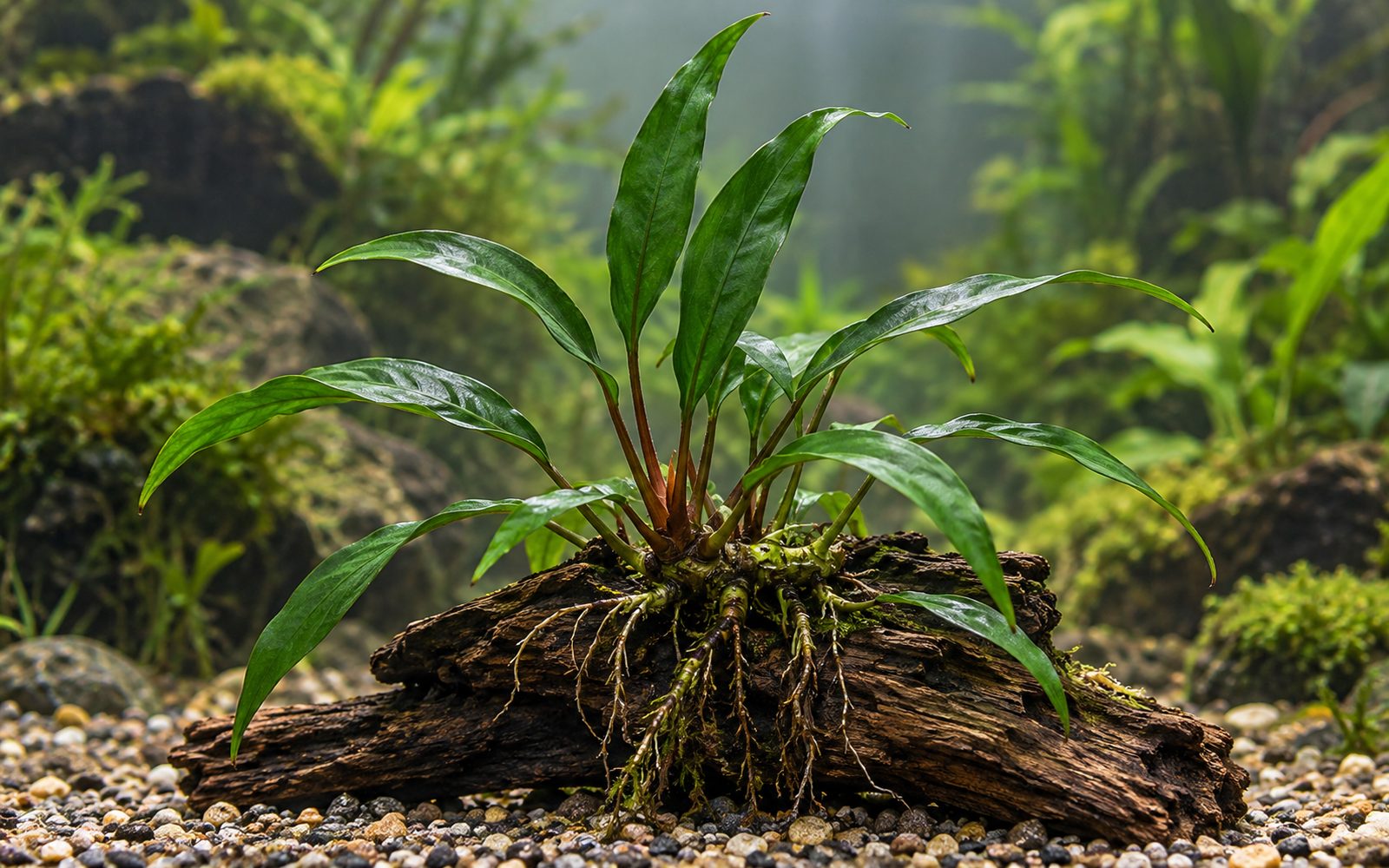 Anubias Angustifolia
Should not be kept together






Hobbyist notes
Things you won't find in books, learned by trial and error. The most helpful ones are on top.
Change history and contributors
- Page created · October 16, 2026